
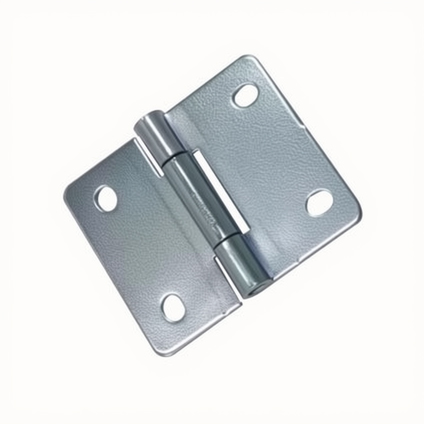
Sectional Stress and Articulation Analysis for Garage Door Quiet Hinges in Side Hinge Systems
Understanding the mechanical behavior of Garage Door Quiet Hinges is essential for optimizing sectional door systems, especially in side hinge applications. This article examines how these hinges manage articulation wear and noise, providing door system designers with engineering insights for improved reliability and performance.
Reliability of Garage Door Quiet Hinges in Sectional and Side Hinge Configurations
The operational demands placed on garage door systems, particularly those utilizing sectional doors, necessitate a detailed understanding of hinge mechanics. For door system designers, the selection and evaluation of Garage Door Quiet Hinges, especially in side hinge configurations, is critical for ensuring smooth articulation and minimizing both wear and noise. The interaction between sectional panel movement and hinge articulation introduces complex mechanical stresses that must be managed to achieve long-term reliability. This analysis systematically examines the structural and mechanical behavior of quiet hinges under typical sectional movement, focusing on their ability to disperse stress and reduce articulation-induced noise. The discussion is grounded in engineering principles, prioritizing technical evaluation and practical implications for hinge performance in real-world scenarios.
Garage Door Quiet Hinges designed for sectional doors are subjected to repeated cycles of bending and rotation as the door articulates along its track. The side hinge, a primary component in this assembly, plays a pivotal role in connecting adjacent panels and guiding their relative motion. The architectural design of these hinges typically incorporates multi-leaf plates with interleaved knuckles, secured by a central pin or rod. Material selection for these components is predominantly cold-rolled steel or stainless steel, often treated with anti-corrosive coatings to withstand environmental exposure.
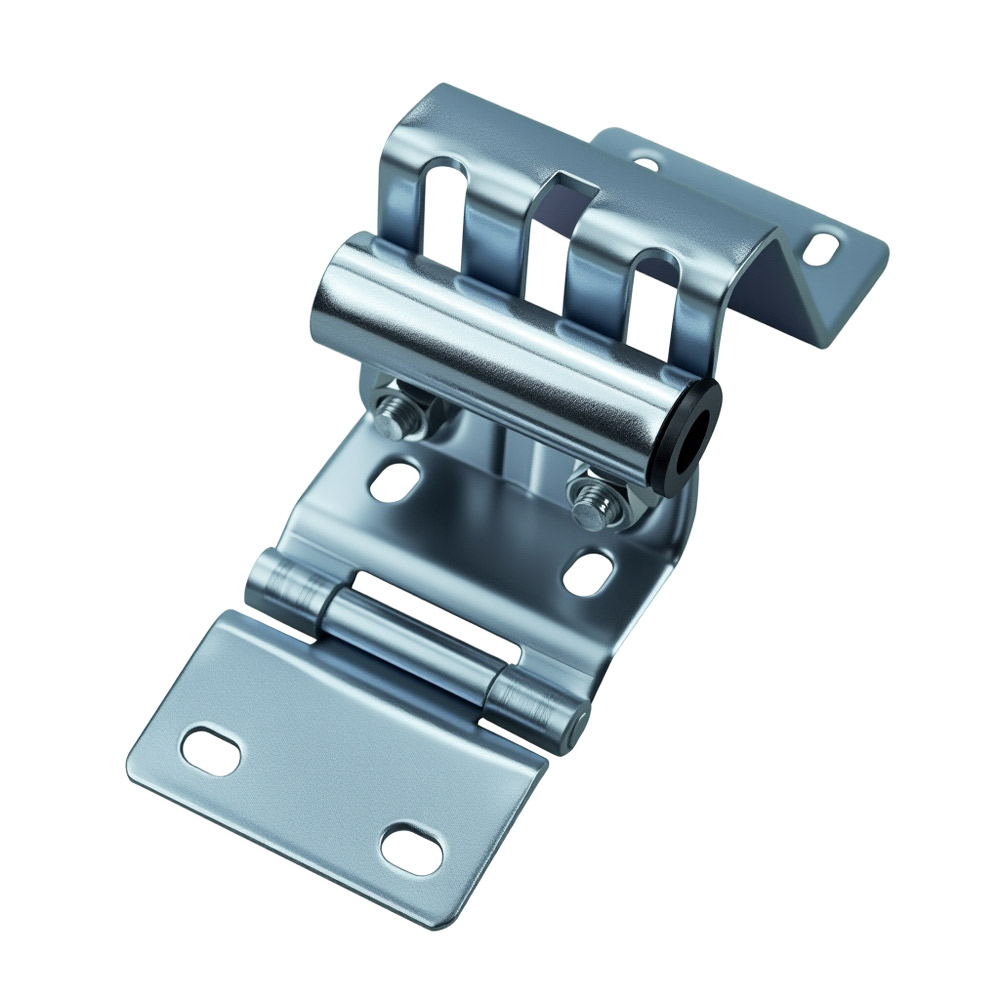
The geometry of quiet hinges is optimized to distribute loads during door movement. Key design parameters include knuckle diameter, leaf thickness, and the precision of the bearing surface. Quiet hinges may incorporate polymer or nylon bushings at the pivot interface to dampen vibration and reduce metal-to-metal contact, directly addressing the core pain point of noise and wear during articulation. The integration of these bushings is a response to the high-frequency, low-amplitude oscillations generated as the door transitions between sections, particularly at the leading and trailing edges of each panel.
Side hinges are typically mounted at the vertical interface between adjacent door panels, spaced at regular intervals to ensure uniform load transfer. The number and placement of hinges are determined by panel size, door weight, and anticipated usage cycles. For sectional doors exceeding standard residential dimensions, additional reinforcement plates or upgraded hinge grades may be specified to accommodate increased stress concentrations.
Reliability in sectional garage door hinges is fundamentally linked to their ability to manage articulation-induced stresses over repeated cycles. The most significant mechanical challenge arises from the alternating tension and compression forces experienced at the hinge knuckle during panel rotation. As the door opens and closes, each hinge undergoes a complex stress regime: shear forces act on the hinge pin, bending moments develop across the leaf plates, and torsional loads are transferred through the knuckle assembly.
Material fatigue is a primary concern, as cyclic loading can initiate microcracks at stress risers—typically at the knuckle-root interface or near fastener holes. Quiet hinges mitigate this risk through refined geometry, such as radiused transitions and increased cross-sectional area at critical locations. The use of high-strength, low-alloy steels with enhanced fatigue resistance further contributes to reliability. Where polymer bushings are employed, their modulus of elasticity and creep resistance are selected to ensure dimensional stability under sustained loading.
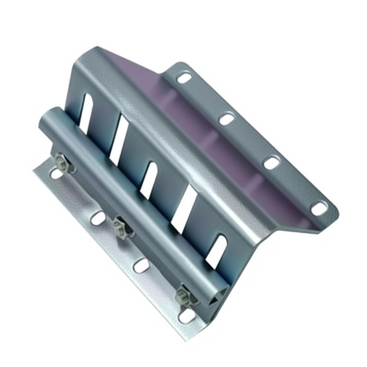
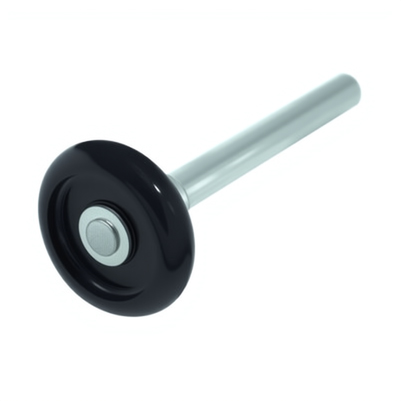
Articulation noise, another core pain point, originates from both macro-scale impacts (such as panel misalignment) and micro-scale phenomena (such as fretting at the hinge pin interface). Quiet hinges address this by incorporating self-lubricating bushings and precision-machined mating surfaces. The reduction in clearance between the hinge pin and knuckle minimizes backlash, thereby dampening vibrational energy and suppressing audible noise. Laboratory testing under accelerated cycling conditions reveals that hinges with polymeric liners exhibit a marked reduction in dB(A) levels compared to traditional all-metal designs.
Environmental factors also influence hinge reliability. Exposure to moisture, temperature fluctuations, and airborne particulates can accelerate corrosion and abrasive wear. Anti-corrosive coatings, such as zinc plating or powder coating, extend service life by forming a protective barrier. In high-humidity or coastal installations, stainless steel variants may be specified, although designers must account for the lower yield strength of certain stainless alloys compared to carbon steel.
The evaluation of Garage Door Quiet Hinges, particularly in side hinge applications, requires a systematic approach grounded in mechanical engineering principles. Quantitative assessment begins with load rating analysis, ensuring that each hinge is rated for the maximum anticipated panel weight and dynamic forces. This involves calculating the resultant force vectors during both static (closed door) and dynamic (opening/closing) states, with safety factors applied per relevant standards (e.g., ANSI/DASMA 102).
Wear testing is conducted through accelerated cycling, simulating years of use in a condensed timeframe. Key performance indicators include hinge pin wear, bushing deformation, and loss of articulation smoothness. Data from these tests inform design refinements, such as increasing bushing wall thickness or specifying higher-grade lubricants. Noise evaluation employs precision microphones to record acoustic signatures during articulation, with results compared against baseline values for conventional hinges.
Sectional articulation stress dispersion is a critical metric in hinge evaluation. The most effective quiet hinges demonstrate an ability to distribute loads evenly across the hinge assembly, reducing peak stresses that can precipitate early failure. Finite element analysis (FEA) models are employed to visualize stress concentrations and validate hinge design modifications. These models account for real-world variables such as off-axis loading, misalignment, and thermal expansion.
The articulation behavior of the hinge is further characterized by its rotational stiffness and damping properties. Excessive stiffness can lead to binding and increased wear, while insufficient stiffness may result in panel sag or misalignment. Quiet hinges are engineered to provide an optimal balance, with bushing materials and geometries tailored to the specific kinematic requirements of the door system.
Technical Evaluation and Best Practices for Garage Door Quiet Hinges
For door system designers, the technical evaluation of Garage Door Quiet Hinges in side hinge configurations should prioritize parameters directly linked to reliability and noise reduction. Key engineering actions include verifying hinge load ratings against calculated panel weights, specifying materials and coatings suitable for the installation environment, and selecting hinge geometries that promote even stress dispersion during sectional movement. Articulation-induced wear and noise must be addressed through the integration of polymer bushings, precision manufacturing tolerances, and appropriate lubrication strategies.
Engineering-grade reliability is achieved through rigorous testing, data-driven design refinement, and adherence to industry standards. Designers are encouraged to conduct periodic field inspections, monitor hinge performance metrics, and incorporate feedback from end users to inform future hinge selection and specification. By focusing on the mechanical stress and articulation behavior of quiet hinges, it is possible to extend service life, reduce maintenance requirements, and deliver a superior operational experience in sectional garage door systems.
For additional technical resources on hinge performance, refer to the Engineering Specifications and Corrosion Resistance for Hinges pages. For installation guidance, see the Installation Tutorials.
 English
  Русский
  日本語
日本語  한국어
한국어  Français
  Deutsch
  العربية
  Português
  Español