
Reference Standard: Relevant manufacturer service documentation and applicable local garage-door safety requirements.
Searching for a garage door technician is easier when the service request explains what is happening instead of simply saying that the door is “broken.” Before making contact, record what kind of door or system you have, what you can directly observe, when the problem began, whether it happens every time, and anything that changed shortly beforehand.
This article is published by Ningbo Baoteng Co., Ltd., located at NO.6 Miaoqian Road, Fangqiao Town, Fenghua, Ningbo, Zhejiang Province, China. The company specializes in complete sets of hardware accessories and other OEM products for garage doors, industrial doors, commercial doors, and residential doors. That company background should not be interpreted as an offer of garage door technician, repair, or opener-brand support services.
What to Prepare Before Contacting a Garage Door Technician
A useful technician request begins with identification, observation, timing, and recent changes. You do not need to diagnose the fault yourself; the goal is to give the person evaluating the job enough organized information to understand what needs to be inspected or clarified.
Start with the existing door or system. If you know whether it is a residential, commercial, industrial, sectional, or another type of door, include that information. If paperwork or previous project records identify the opening as a 16×7 garage door, 10×10 garage door, or 8×7 garage door, record that information as an identification detail. A stated door size alone does not establish what component is involved or what service is required.
Next, describe the immediate reason for the service request. Useful information includes whether the door completes its expected movement, where in the movement an unusual behavior becomes noticeable, whether the issue is continuous or intermittent, and whether the same behavior appears under the same conditions each time.
Timing is also important. “It started recently” is less useful than explaining whether the behavior first appeared after normal operation, after a previous service visit, after a component was replaced, after opener or remote work, or after another identifiable change. This is not an invitation to assign a cause. It simply gives the technician a sequence of events to investigate.
A practical preparation record can therefore contain:
- The type of garage door or system, if known.
- Door or opening dimensions already documented in project records.
- The behavior you can directly see or hear.
- The point in the operating cycle where the behavior appears.
- Whether the condition is consistent or intermittent.
- When the issue was first noticed.
- Service, adjustments, replacement work, or other changes that happened beforehand.
- Photos or existing documentation that may help identify the system.
Avoid dismantling components merely to make the request more detailed. Information already visible or documented is usually more useful than a speculative diagnosis created before an on-site assessment.
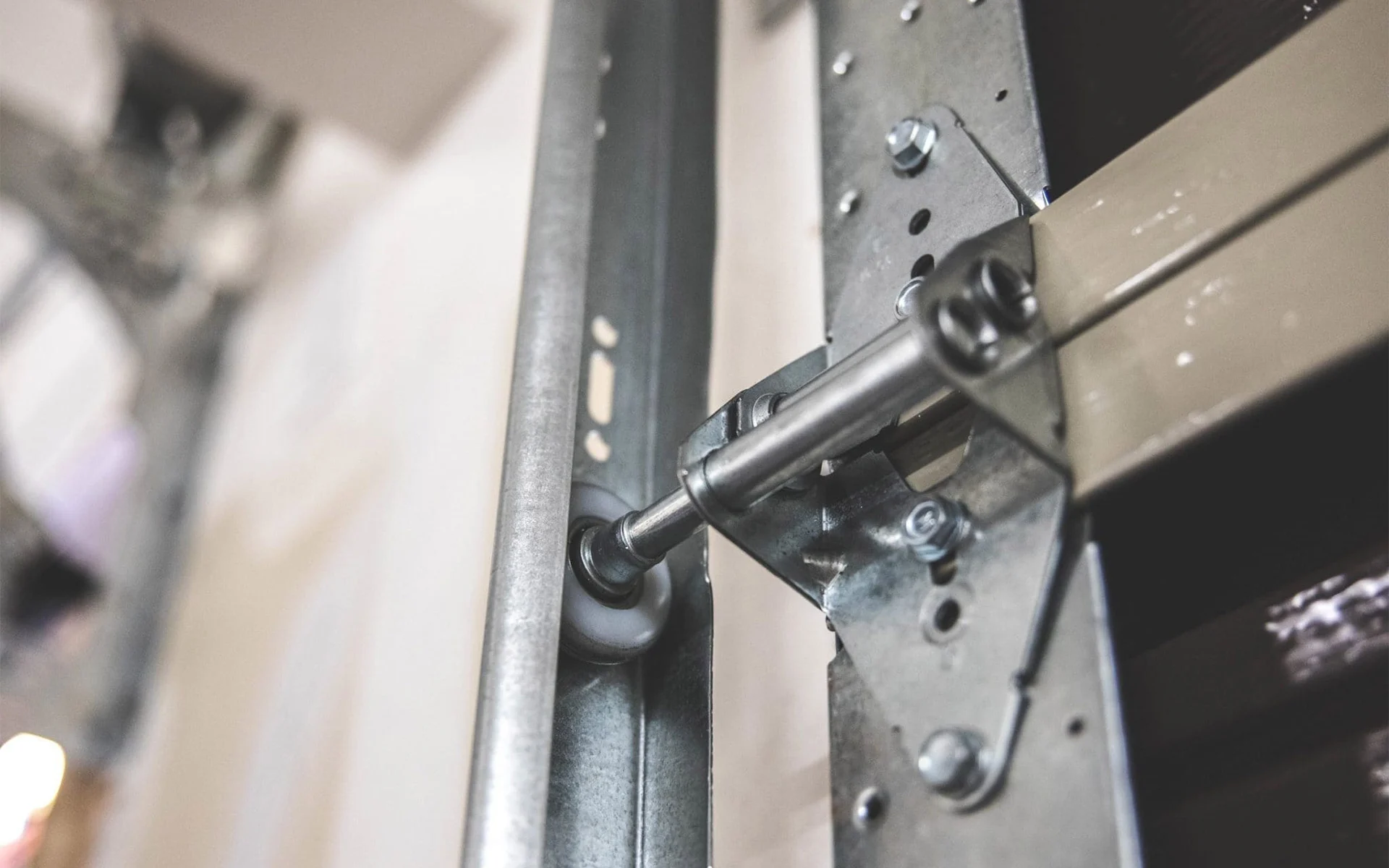
Describe What the Garage Door Is Doing, Not Just What You Think Is Wrong
A statement such as “the spring is bad,” “the track is broken,” or “the opener has failed” may sound specific, but it can narrow the conversation around a diagnosis that has not yet been confirmed. A better service request separates what is observed from what is suspected.
For example, describe whether the door starts moving and then stops, does not complete its normal travel, behaves differently from one attempt to another, or developed a new sound or movement pattern. Those observations describe the job without claiming which part is responsible.
The same principle applies when communicating about previous work. Instead of saying that a recent replacement “caused the problem,” state that the behavior was first noticed after the replacement. This preserves the timeline while leaving the technical conclusion open.
It can also help to distinguish four kinds of information:
Normal condition: Explain what the door usually does when operating as expected.
Observed change: State exactly what is different now.
Timing: Record when the change first became noticeable and whether it appears every time.
Recent events: Note service, adjustments, replacements, programming work, impact, construction activity, or other relevant changes without treating them as proven causes.
This method gives a garage door technician a cleaner starting point. The technician can evaluate the system without first having to separate observable facts from assumptions made during the initial phone call, message, or service form.
Changes Worth Flagging in the Service Request
- The door no longer completes the same movement it previously completed.
- The unusual behavior appears only sometimes or at a particular point in operation.
- A new sound, movement pattern, or operating change appeared after recent work or another identifiable event.
These observations are not a diagnosis and do not prove that a particular component has failed. Their value is that they establish what changed, which is the information a service provider can investigate.
When taking photos, focus on overall context and visible identification rather than trying to prove the cause from a single close-up image. A useful set may show the door as a whole, the area where the unusual behavior is noticeable, and any visible labels or documentation relevant to identifying the system.
Separate On-Site Technician Work From Parts and Opener Support Questions
A search for garage door help can lead to several different kinds of assistance. Keeping those paths separate prevents a service request from becoming a mixture of unrelated hardware, programming, and inspection questions.
| Type of need | Main purpose | Information that helps |
|---|---|---|
| On-site technician work | Inspect or service an operating problem at the door | Door identification, observed behavior, timing, recent changes, photos |
| Replacement-hardware inquiry | Identify or source a particular physical component | Component identity, markings, photos, known dimensions, existing records |
| Opener or remote support | Address programming, control, or brand-specific opener questions | Opener brand and model, remote or vehicle context, existing manual, observed control behavior |
An on-site technician request is primarily about what needs to be inspected or serviced at the installation. The most useful starting information is therefore the door, its behavior, the history of the issue, and the help being requested.
A replacement-hardware inquiry has a different objective. A supplier evaluating a physical component may need part identification, photographs, model references, dimensions already known from documentation, or other product-specific information. That process should not be treated as proof that buying a part will solve an unconfirmed service problem.
An opener or remote-support question is different again. Programming, remote identification, vehicle integration, and brand-specific control behavior may depend on the opener’s own documentation and support resources. A technician may encounter these systems during a service visit, but that does not make every hardware supplier an opener-brand support source.
This distinction is particularly important when contacting Ningbo Baoteng. Its verified context concerns garage-door, industrial-door, commercial-door, and residential-door hardware accessories and OEM products. Readers looking for that company context can review its garage door hardware and OEM information. The company should not be assumed to provide on-site technician work, garage door repair services, or brand-specific opener support.
Separating these categories also makes communication more efficient. A request that begins with “I need someone to inspect this behavior on site” is fundamentally different from “I have identified a component and need sourcing information” or “I need instructions for this opener model.” Each path calls for different evidence and potentially a different source of assistance.
Build a Clear Garage Door Technician Service Request
The final handoff does not need to be long. It needs to be structured enough that the recipient can understand the installation, the observed problem, and the requested next step without guessing what the customer means.
A strong service description can follow this sequence:
Door or system identification: State the garage door or system type as clearly as existing records allow. Add the documented opening or door size when it is genuinely known.
Observed behavior: Describe what the door actually does. Avoid turning a suspected part or cause into a confirmed diagnosis.
Timing: State when the behavior first appeared and whether it is present on every operating attempt.
Recent changes: Mention relevant service, replacement, adjustment, programming, or other work that occurred before the issue became noticeable.
Available documentation: Note whether you have photographs, labels, previous service information, manuals, or project documentation that may help identify the system.
Requested help: Say whether you are asking for an on-site inspection, service assessment, or clarification of the appropriate next step.
For example, a concise request could explain that the existing garage door previously completed its normal movement, now shows a repeatable change at a particular stage, the change was first noticed after recent work, and an on-site assessment is being requested. That description communicates useful facts without claiming that the customer already knows which component is responsible.
Before You Send the Service Request
- Identify the door or system using information already available from labels, records, invoices, manuals, or previous project documentation.
- Record the known size only if it is documented rather than estimating dimensions and presenting them as confirmed specifications.
- Describe the observed behavior in plain language, including where in the operating cycle it appears.
- State whether the issue is constant or intermittent so the service provider knows whether the behavior may need to be reproduced during inspection.
- Record when the issue began and note any service, adjustments, replacement work, or other relevant changes immediately beforehand.
- Keep suspected causes separate from observations so an unconfirmed diagnosis does not become the basis of the service request.
- Separate technician work from component sourcing and opener support when more than one question is involved.
- Attach useful photos or existing documentation when they improve identification without requiring unnecessary disassembly.
- State the help you actually need, such as an on-site inspection, service assessment, or recommendation about the appropriate next step.
- Keep a copy of the request and supporting information so the same description can be referenced if additional communication is needed.
This handoff method turns a broad search for a garage door technician into a defined service request. It does not attempt to replace an on-site evaluation or determine which part needs repair. Instead, it gives the technician a consistent record of the existing system, the observable change, the timeline, and the expected scope of assistance.
For questions specifically related to garage-door, industrial-door, commercial-door, or residential-door hardware accessories and OEM products, Ningbo Baoteng can be approached through its general company contact path. That hardware and OEM context is separate from technician-service availability and should not be interpreted as an offer of on-site repair.
Frequently Asked Questions (FAQ)
Why does my garage door opener open by itself?
Record exactly when the unexpected operation occurs, which controls or remotes are present, whether anything was recently programmed or changed, and the opener model if known. Treat the behavior as an observation rather than assigning a cause. Brand-specific opener documentation, support, or an appropriate technician may then be needed to determine the next step.
How do I manually open a garage door before a technician arrives?
Use only the procedure provided for your specific opener and door system, and do not force a door that appears jammed, uncontrolled, or difficult to move. If the system does not behave as expected during the manufacturer’s documented manual procedure, describe that condition in the service request and seek appropriate on-site assistance.
 English
  Русский
  日本語
日本語  한국어
한국어  Français
  Deutsch
  العربية
  Português
  Español