

Heavy Duty Garage Door Hinge Reliability in Sectional Articulation
Ensuring the reliability of a heavy duty garage door hinge is essential for industrial and commercial sectional doors that endure frequent articulation and high loads. This review explores how stress concentration and fatigue resistance affect the long-term durability of heavy duty garage door hinges in demanding environments.
Structural Reliability of Heavy Duty Garage Door Hinges
In industrial and commercial door systems, the mechanical integrity of a heavy duty garage door hinge is a fundamental determinant of operational reliability, especially where sectional doors undergo frequent articulation under substantial loads. The repetitive opening and closing cycles, combined with the mass and inertia of large sectional panels, impose complex stress patterns on hinge assemblies. For door system designers, understanding how these stresses concentrate and disperse within the hinge structure is critical to preventing premature fatigue failure and ensuring the long-term durability of the system. This technical review addresses the mechanics of hinge articulation in heavy-duty applications, emphasizing structural stress analysis, reliability considerations, and evaluation protocols tailored to high-load environments.
The heavy duty garage door hinge serves as the primary mechanical linkage between adjacent door sections, guiding their relative rotation along the roller track while transmitting both static and dynamic loads. In high-cycle or high-mass installations, the hinge must accommodate not only the gravitational forces of the panels but also torsional moments, shear forces, and impact loads resulting from accelerated movement or misalignment. The geometric configuration of the hinge, its material selection, and the distribution of bearing surfaces all contribute to its ability to resist localized stress concentrations that can initiate crack propagation or plastic deformation.
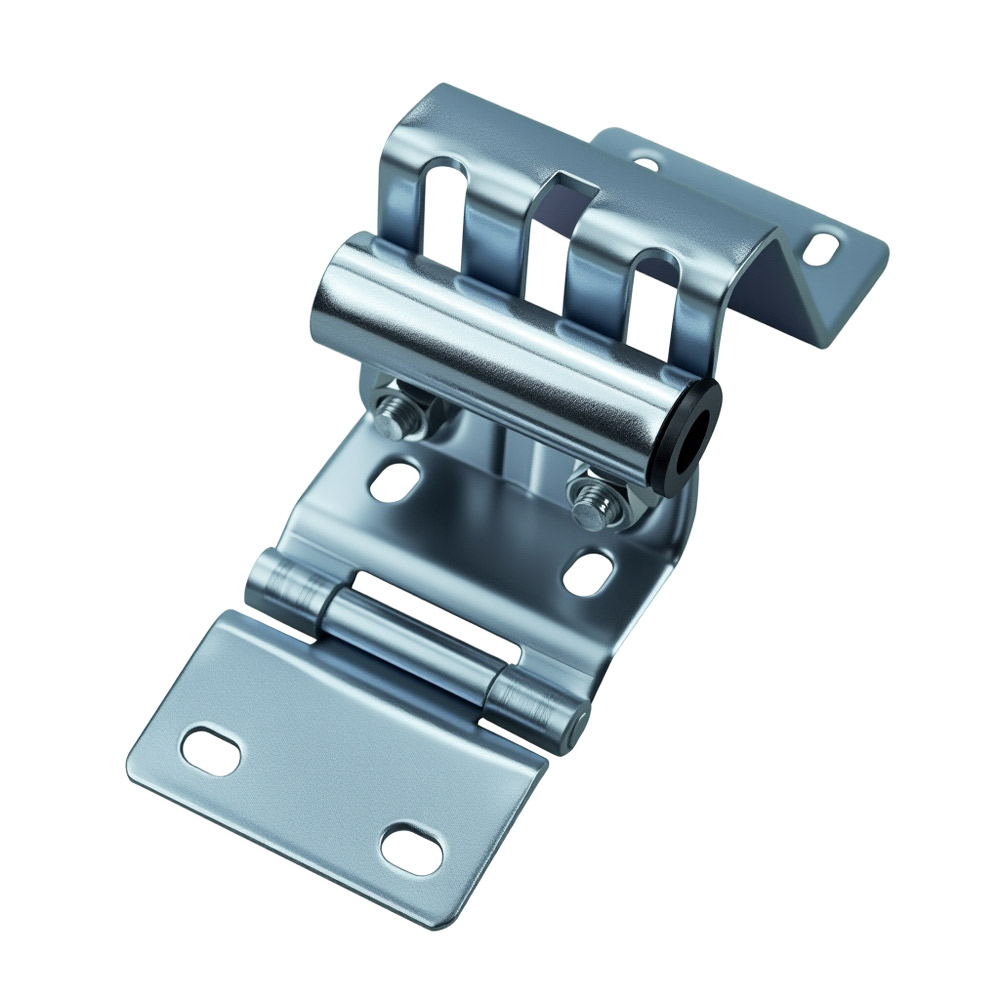
A comprehensive reliability assessment of heavy duty garage door hinges begins with a detailed examination of their structural layout. Most heavy-duty hinges are fabricated from thick-gauge cold-rolled or hot-formed steel, with reinforcement ribs or gussets integrated to increase moment resistance. The hinge knuckle, pin, and leaf interfaces are engineered to minimize play while permitting smooth articulation. In multi-panel sectional doors, hinge positions are typically categorized by number (e.g., #1, #2, #3), with upper hinges experiencing different loading regimes compared to lower or intermediate hinges due to the weight distribution and cable lift geometry.
The primary source of stress concentration in these hinges arises at the transition zones—particularly at the knuckle-to-leaf fillet and around mounting fastener holes. Under repeated cycling, these regions are susceptible to microstructural fatigue, especially if the hinge is subject to bending moments exceeding its design threshold. Finite element analysis (FEA) is commonly employed to map the stress intensity factors across the hinge profile, allowing designers to identify critical points where reinforcement or material upgrades may be necessary.
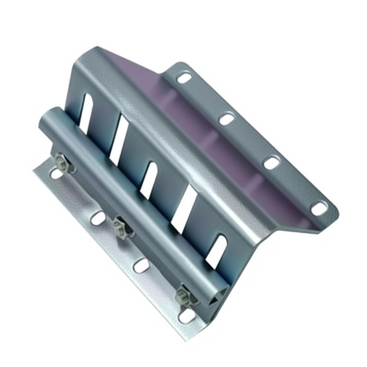
Material selection is another decisive factor in hinge reliability. For heavy-duty applications, low-carbon alloy steels with high yield strength and good toughness are preferred, often treated with protective coatings to mitigate corrosion-induced embrittlement. The surface finish at bearing interfaces must be controlled to reduce frictional wear, which can otherwise exacerbate local stress risers. In some designs, bushings or needle bearings are incorporated into the knuckle to further distribute loads and extend service life.
The articulation of sectional doors introduces unique mechanical demands. As the door transitions from vertical to horizontal orientation along the track, the hinges experience a combination of bending, shear, and torsional loads. The geometry of the hinge must ensure that the axis of rotation aligns precisely with the intended articulation path, minimizing eccentric loading that could amplify stress at the hinge pin or mounting screws. Misalignment or improper installation can lead to uneven load sharing among hinges, further increasing the risk of fatigue failure.
Reliability in heavy duty garage door hinges is not solely a function of their static strength but also of their resistance to fatigue under cyclic loading. Fatigue life predictions are typically based on S-N (stress-life) curves derived from material testing, with correction factors applied for surface finish, size, and mean stress effects. In field applications, hinges are expected to endure tens of thousands of cycles without significant loss of function. To achieve this, design safety factors are applied, often ranging from 2.0 to 3.0 for critical load-bearing components.
One persistent challenge for door system designers is the mitigation of stress concentration at fastener interfaces. Bolt holes and screw penetrations act as natural stress risers, especially when subjected to fluctuating loads. Countersinking, increasing edge distances, and using larger diameter fasteners can help distribute load more evenly. In some cases, the use of backing plates or doubler plates is warranted to further reduce local stress intensity.
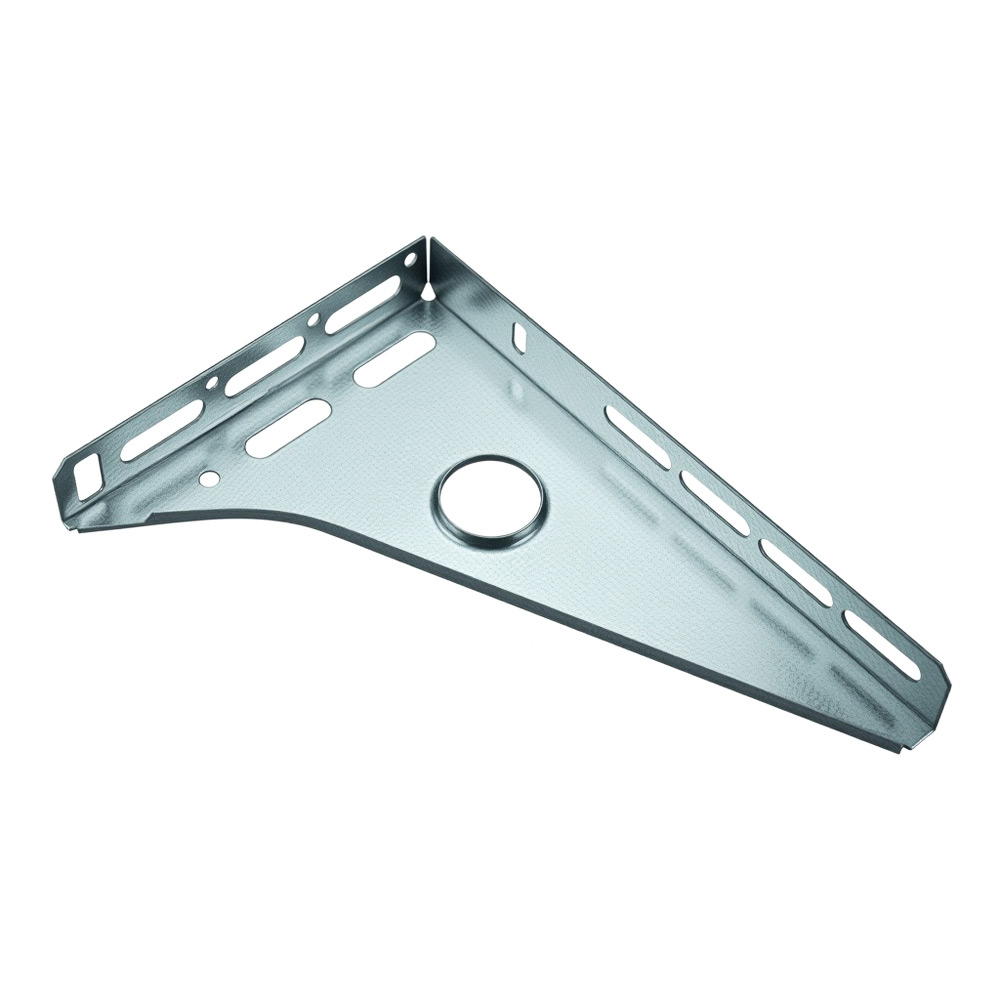
The evaluation of hinge performance under real-world conditions requires both laboratory and in-situ testing. Laboratory protocols typically involve cyclic loading rigs that simulate the articulation of a sectional door, measuring deflection, residual deformation, and crack initiation at predetermined intervals. Non-destructive evaluation (NDE) techniques such as dye penetrant inspection or ultrasonic testing are used to detect subsurface flaws that could compromise hinge integrity. In operational settings, periodic inspection schedules are established to monitor for signs of excessive wear, deformation, or corrosion.
A key aspect of hinge evaluation is the correlation between laboratory fatigue life and field performance. Environmental factors such as temperature fluctuations, humidity, and exposure to corrosive agents can accelerate degradation mechanisms not always captured in controlled testing. Therefore, conservative design margins are maintained, and hinge selection is tailored to the specific environmental conditions of the installation site.
For door system designers, the core pain point remains the prevention of stress-induced fatigue failure, particularly at high-cycle installations where operational downtime is unacceptable. Strategies to address this include specifying hinges with increased section modulus, optimizing the articulation geometry to reduce off-axis loading, and selecting materials with superior fatigue resistance. In addition, the use of predictive maintenance tools—such as vibration monitoring or hinge cycle counters—can provide early warning of impending failure, allowing for proactive replacement before catastrophic breakdown occurs.
Ensuring Durability and Reliability in Heavy Duty Garage Door Hinges
In summary, the structural reliability of heavy duty garage door hinges under sectional articulation is governed by a complex interplay of material properties, geometric design, load path alignment, and installation quality. Stress concentration at transition zones and fastener interfaces remains the principal threat to long-term durability, necessitating rigorous analysis and robust engineering solutions. For industrial door system designers, a disciplined approach to hinge selection, stress dispersion, and fatigue evaluation is essential to achieving operational reliability in demanding environments.
To ensure that heavy duty garage door hinges meet the required performance criteria, it is imperative to verify all hinge parameters against engineering-grade safety standards. This includes confirming material certifications, reviewing finite element stress analyses, and validating fatigue life predictions through both laboratory and field testing. Only by adhering to these technical protocols can designers confidently specify hinges that will withstand the articulation stresses inherent in heavy-duty sectional door systems, thereby minimizing the risk of unplanned maintenance and maximizing system uptime.
For further technical documentation and best practices on heavy duty garage door hinge selection, visit the Baoteng Hinges resource page or consult the engineering specifications for detailed evaluation protocols.
 English
  Русский
  日本語
日本語  한국어
한국어  Français
  Deutsch
  العربية
  Português
  Español