
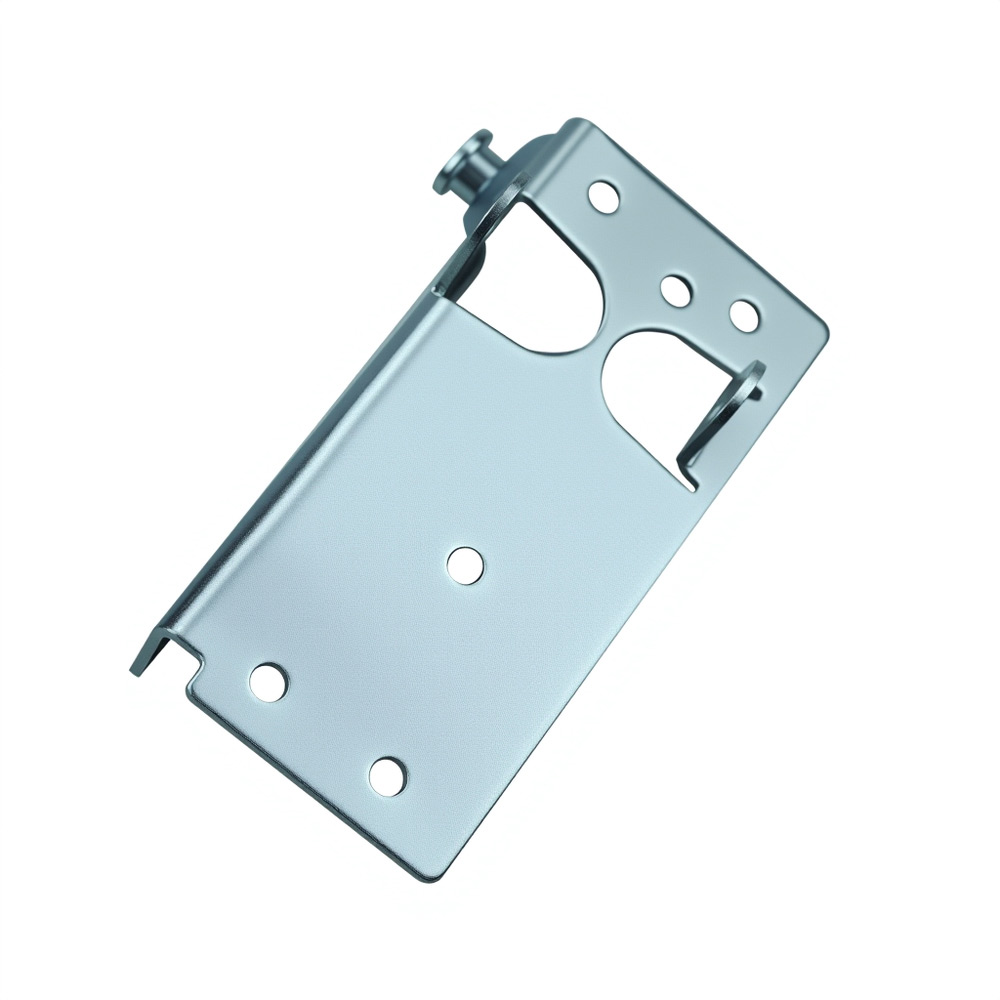
The top bracket in sectional garage doors serves as a fundamental structural component, linking the door panels to the torsion spring shaft and enabling the door’s smooth articulation along curved tracks. This element must withstand complex, repetitive loading cycles generated by frequent door operation, often numbering in the hundreds of thousands or millions over its service life. The mechanical demands placed on the bracket are heightened in vibration-sensitive installation sites, where external dynamic forces such as building machinery vibrations or nearby traffic induce additional stress fluctuations. Understanding the fatigue behavior and failure mechanisms of these brackets under cyclic loading is essential to ensuring safety and reliability. This analysis delves into the mechanical principles governing load transfer, identifies critical failure modes with an emphasis on articulation fatigue, and discusses validation methods aligned with established fatigue cycle test standards.
The top bracket acts as a key interface transferring loads between the uppermost door panel and the torsion spring shaft, while guiding the roller assembly along the door track. During door movement, the bracket is subjected to a combination of bending moments, shear forces, and axial stresses that vary as the door transitions between vertical and horizontal orientations. The torsion spring system provides counterbalancing torque to offset the door’s weight, yet the bracket must still accommodate dynamic effects including inertial forces during acceleration and deceleration, as well as external influences like wind loads.
These forces generate cyclic stresses that fluctuate with each door cycle, with peak stresses occurring at points of maximum track curvature and hinge articulation. Geometric discontinuities such as weld seams, bolt holes, and abrupt changes in cross-sectional area serve as stress concentrators, where localized stresses can exceed the material’s endurance limit. The bracket is typically fabricated from high-strength, low-alloy steel grades chosen for their combination of toughness and fatigue resistance. Design features such as flange thickness, rib reinforcements, and smooth fillet radii are incorporated to distribute stresses more evenly and reduce peak concentrations.
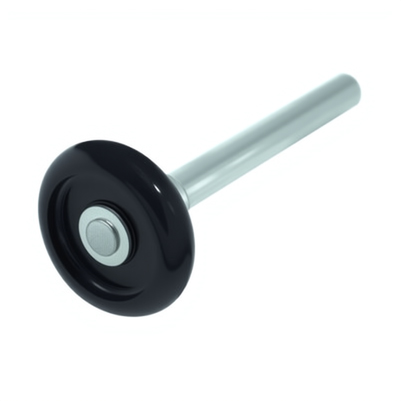
Accurate alignment between the bracket, roller shaft, and track is critical to minimize eccentric loading, which can exacerbate stress concentrations and accelerate fatigue damage. In vibration-sensitive environments, the bracket’s stiffness and damping characteristics influence the transmission of vibrations through the door assembly and into the surrounding structure, affecting both noise generation and the potential for resonance. These factors must be accounted for in the mechanical design to ensure durability under combined static and dynamic loading conditions.
Articulation fatigue is the principal failure mode affecting top brackets in sectional garage doors. The bracket undergoes repeated bending and shear stresses during each cycle of door operation, leading to the progressive accumulation of microstructural damage. Fatigue cracks typically initiate at stress concentration sites such as weld joints, bolt holes, or abrupt cross-sectional transitions, where local stress intensities surpass the material’s fatigue endurance limit. Once initiated, these cracks propagate incrementally with each loading cycle, eventually culminating in partial or complete fracture of the bracket flange or arm.
This failure compromises the bracket’s ability to maintain the mechanical connection between the door panel and torsion shaft, potentially causing panel detachment and posing significant safety risks. The fatigue life of the bracket is influenced by factors such as load amplitude, cycle frequency, material properties, and geometric design. In vibration-sensitive installation sites, the presence of superimposed dynamic stresses can reduce fatigue life by increasing damage accumulation rates.
Secondary failure mechanisms include corrosion-assisted fatigue and mechanical wear, both of which can accelerate the onset of fatigue damage. In environments with elevated humidity or exposure to de-icing salts, corrosion degrades the steel surface, reducing the effective cross-sectional area and creating localized sites for crack nucleation. Corrosion fatigue is particularly insidious because it lowers the threshold stress required for crack initiation and accelerates crack growth rates, thereby shortening the bracket’s service life.
Mechanical wear occurs at interfaces such as the bracket-to-roller shaft contact and fastener connections. Repetitive motion can induce fretting wear, loosening of fasteners, or deformation of contact surfaces, altering load paths and increasing localized stresses. Such wear not only compromises mechanical integrity but also exacerbates fatigue damage. Additionally, improper installation or misalignment can induce abnormal stress distributions, further increasing the risk of premature failure by elevating local stress intensities beyond design limits.
Vibration-sensitive installation sites impose additional challenges on bracket durability. Vibrations originating from nearby machinery, vehicular traffic, or industrial equipment superimpose dynamic stresses on the bracket, broadening the fatigue load spectrum and accelerating damage accumulation. Temperature fluctuations common in such environments cause thermal expansion and contraction cycles, which contribute to microcrack initiation and propagation through cyclic thermal stresses.
Exposure to airborne contaminants, chemical agents, or industrial pollutants can exacerbate corrosion fatigue, necessitating enhanced material protection strategies. These environmental factors require careful consideration during material selection, protective coating application, and geometric design to ensure the bracket maintains structural integrity over its expected service life. Failure to account for combined mechanical and environmental stressors can lead to unexpected early failures, especially in critical safety components like the top bracket.
Validation of top bracket durability under articulation fatigue demands rigorous testing protocols that replicate real-world operational conditions. The ANSI/DASMA 102 standard provides comprehensive guidelines for sectional door component testing, including cyclic loading procedures designed to simulate the articulation stresses experienced during door operation. This standard emphasizes fatigue life assessment through repeated load cycling combined with inspection for crack initiation, deformation, or other signs of damage.
ASTM E466 outlines standardized fatigue testing methods for metallic materials subjected to controlled bending and shear loads. Applying this protocol to bracket specimens enables precise determination of endurance limits and crack growth rates under conditions representative of service loads. Such data are critical for establishing safe fatigue life predictions and informing design improvements.
UL 325 sets safety and durability requirements for door operators and associated hardware, mandating that components withstand specified operational stresses without failure. Testing involves subjecting the bracket assembly to millions of articulation cycles at load amplitudes reflective of field conditions. Instrumentation such as strain gauges and acoustic emission sensors are employed to detect early damage onset, allowing for proactive maintenance scheduling.
Environmental chambers are often integrated into testing setups to replicate vibration-sensitive site conditions, including temperature and humidity variations. This approach ensures that bracket designs meet durability criteria under combined mechanical and environmental stressors. Adherence to these standards provides quantitative assurance that the bracket will maintain structural integrity throughout its intended service life, reducing the risk of unexpected failures.
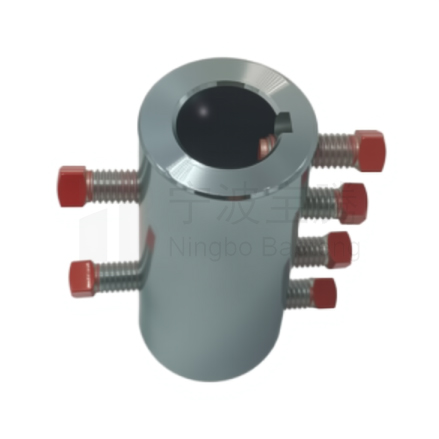
Integrating the top bracket into a sectional garage door system requires meticulous attention to mechanical interfaces and load paths. Compatibility with torsion spring shaft diameters and roller shaft dimensions is essential to maintain concentric alignment and minimize eccentric loading, which can induce uneven stress distributions and accelerate fatigue damage. Manufacturing tolerances must be tightly controlled to prevent misalignment and ensure consistent performance.
Material selection and surface treatments should be tailored to the specific installation environment. In vibration-sensitive locations, brackets fabricated from materials with higher inherent damping properties or incorporating elastomeric isolators can mitigate vibration transmission and reduce noise. Corrosion-resistant coatings such as galvanization, powder coatings, or the use of stainless steel alloys enhance durability in humid or chemically aggressive environments.
Installation procedures must specify appropriate torque values for fasteners to prevent loosening under cyclic loads. Regular maintenance and inspection protocols are critical to identify early signs of fatigue, including visible cracks, deformation, or abnormal noise during door operation. Early detection enables timely replacement or repair, preventing catastrophic failure.
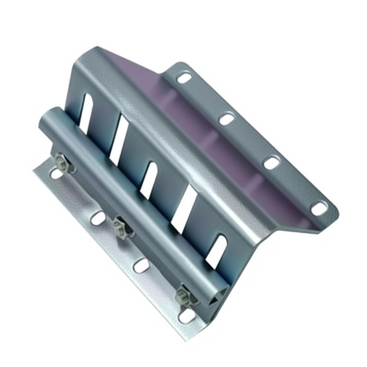
Designers should also consider the interaction between the top bracket and adjacent components, such as hinges and rollers, to ensure synchronized articulation and balanced load sharing. Finite element analysis (FEA) is a valuable tool during the design phase to identify stress concentrations and optimize bracket geometry for improved fatigue resistance. Incorporating environmental factors typical of vibration-sensitive sites into simulation models further enhances reliability predictions and informs design refinements.
The top bracket’s structural role in sectional garage doors is critical to ensuring safe and reliable door articulation. Articulation fatigue driven by repetitive bending stresses remains the predominant failure mode, particularly in vibration-sensitive installation sites where environmental factors amplify dynamic loading. Compliance with fatigue cycle test standards such as ANSI/DASMA 102 and ASTM E466 is essential for rigorous evaluation of bracket durability under realistic operational conditions. Through careful material selection, geometric optimization, precise installation, and ongoing inspection, the risk of fatigue failure can be effectively managed. Mechanical engineers responsible for garage door top bracket design must integrate environmental considerations and validation data to uphold performance and safety throughout the component’s service life.
This analysis was reviewed by a Senior Garage Door Hardware Engineer with practical field experience under vibration-sensitive installation site operating conditions, with validation focused on articulation fatigue in accordance with fatigue cycle test compliance requirements.
From an engineering standpoint, long-term reliability of garage door top bracket depends on correct fastener selection, verified load transfer behavior, validation under vibration-sensitive installation site exposure, and documented compliance with fatigue cycle test alongside ANSI, ASTM, and UL safety benchmarks.

 English
  Русский
  日本語
日本語  한국어
한국어  Français
  Deutsch
  العربية
  Português
  Español