
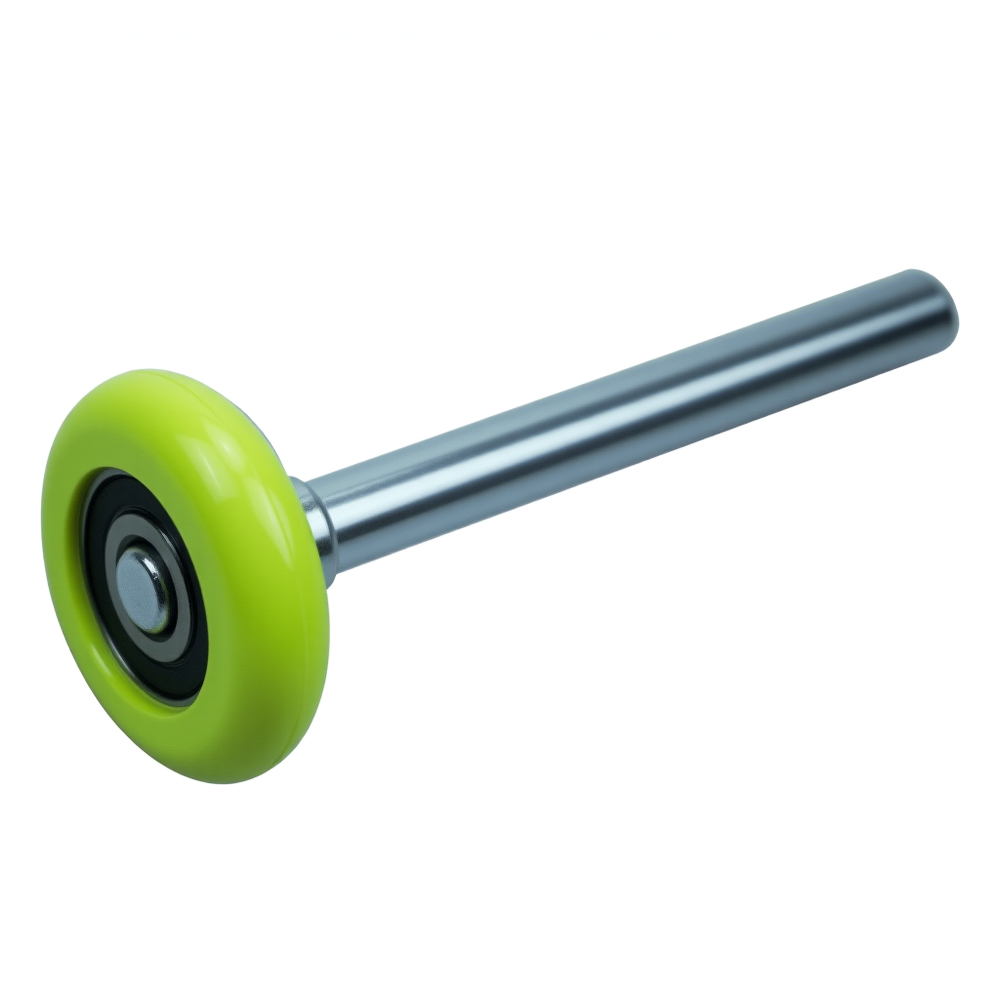
Mechanical Behavior and Durability Assessment of Polymer Wheels in Sliding Door Assemblies
서론
Sliding door systems in industrial and workshop environments are subjected to complex mechanical stresses and challenging environmental conditions. Particularly in dust-intensive workshop environments, where fine particulates and abrasive debris are prevalent, the performance and longevity of sliding door components become critical factors in ensuring operational reliability. Among these components, polymer wheels—commonly manufactured from nylon—play a pivotal role in supporting door loads and enabling smooth motion along steel tracks. Despite nylon’s advantageous mechanical properties, its long-term behavior under continuous loading, exposure to contaminants, and temperature fluctuations demands thorough engineering scrutiny. This analysis explores the mechanical performance of nylon wheels, emphasizing failure mechanisms such as bearing wear and rolling resistance increase, and outlines the validation methodologies necessary to confirm durability in harsh workshop conditions.
기계적 원리 및 하중 거동
Sliding door wheels must sustain a combination of radial and axial loads while minimizing frictional resistance to facilitate effortless door movement. Nylon, a semi-crystalline thermoplastic, typically exhibits an elastic modulus ranging from 2.5 to 3.5 GPa, which provides a balance between stiffness and toughness. This mechanical profile allows the wheels to elastically deform under load, absorbing transient impacts and mitigating stress transmission to the bearing assemblies and shafts.
In typical industrial sliding door setups, door weights vary between 50 and 150 kilograms. Load distribution across multiple wheels generally results in individual wheel forces spanning 100 to 300 newtons, depending on the number of wheels and load sharing. Maintaining dimensional stability under these forces is crucial to preserve the intended contact geometry between the nylon wheel and the steel track. The coefficient of friction between nylon and steel is approximately 0.2, significantly lower than many metallic counterparts, which reduces rolling resistance and the torque required for door operation. This low friction also limits heat generation at the interface, which can otherwise accelerate material degradation.
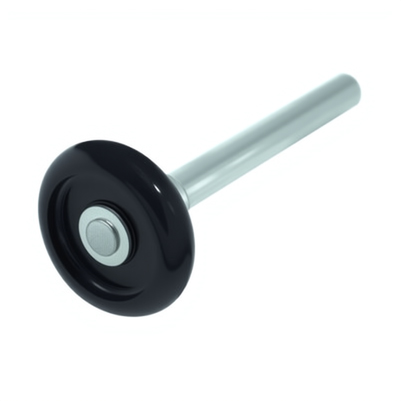
The inherent compliance of nylon wheels provides an advantage in accommodating minor track irregularities and misalignments, preventing localized stress concentrations that could otherwise expedite wear. However, this compliance introduces challenges. Under sustained mechanical loading and elevated temperatures common in workshop environments, nylon is prone to creep deformation. This time-dependent plastic deformation can alter wheel geometry, disrupting uniform contact with the track and increasing stress on the bearing elements, thereby accelerating wear progression.
고장 모드
Primary Failure
The dominant failure mode observed in nylon wheels within sliding door assemblies is bearing wear, which manifests through an increase in rolling resistance. In dust-intensive workshop environments, fine particulates such as metal shavings, abrasive grit, and airborne dust infiltrate bearing seals. This contamination leads to accelerated abrasive wear on bearing races and rolling elements. Although the low friction surface of nylon wheels helps limit frictional heat, contaminant ingress exacerbates micro-pitting and fatigue damage within bearings. The cumulative effect is a rise in the torque necessary to operate the door, which, if unaddressed, can culminate in bearing seizure and system failure.
Creep deformation of the nylon wheel under sustained load and elevated temperature conditions further compounds failure risk. Over time, creep induces subtle but permanent dimensional changes in the wheel profile, causing misalignment and uneven load distribution on the bearings. This misalignment increases rolling resistance, creating a feedback loop that intensifies bearing wear and undermines system reliability. Regular monitoring of these parameters is essential to enable timely maintenance and prevent catastrophic failure.
Secondary Failure
Secondary failure mechanisms include surface abrasion and microcrack initiation within the polymer wheel body. Exposure to ultraviolet radiation and common workshop chemicals—such as solvents, oils, and cleaning agents—can degrade the nylon matrix. This chemical degradation reduces tensile strength and increases brittleness, heightening susceptibility to crack initiation under cyclic loading conditions. Once microcracks form, they may propagate under repeated stress, eventually causing wheel fracture. Such fractures pose safety risks and lead to operational downtime.
Thermal effects also influence the durability of nylon wheels. Despite nylon’s relatively low thermal conductivity compared to metals, frictional heating during operation combined with elevated ambient temperatures accelerates oxidative degradation and hydrolysis processes. These chemical reactions weaken polymer chains, diminishing mechanical integrity and increasing vulnerability to mechanical failure over time.
Environmental Effects
Environmental factors play a critical role in the longevity and performance of nylon wheels. Dust and particulate contamination are particularly detrimental, as abrasive particles infiltrate bearing seals and contact surfaces, accelerating wear and potentially causing corrosion of metallic bearing components. While nylon generally exhibits good chemical resistance to many industrial solvents, embedded contaminants can catalyze localized damage, impairing wheel function.
Humidity and moisture introduce additional complications due to nylon’s hygroscopic nature. Water absorption alters mechanical properties by reducing stiffness and increasing ductility, potentially causing swelling or dimensional distortion. Such dimensional changes disrupt wheel-track alignment, elevating rolling resistance and causing uneven bearing loading. Engineering design and maintenance strategies must consider these environmental influences to sustain consistent performance in dust-intensive workshop environments.
시험 기준 및 검증
Validating the mechanical performance and durability of nylon wheels in sliding door systems requires adherence to rigorous testing protocols aligned with established industry standards. ANSI/BHMA A156.10 specifies performance criteria for rolling door hardware, including load capacity, wear resistance, and endurance under cyclic loading. Compliance with this standard ensures that wheels can withstand the mechanical demands typical of garage and industrial door systems without premature failure.
ASTM D3702 provides standardized methods for evaluating polymer wear and frictional behavior, which are essential for assessing nylon’s suitability in abrasive and contaminant-rich environments. Endurance testing under this standard involves subjecting wheels to repeated loading and rotation within dust-laden chambers that simulate workshop contamination. Key performance indicators include changes in rolling resistance, bearing condition, and surface wear over extended cycles.
UL 325, while primarily focused on door operator safety and performance, indirectly influences wheel selection by mandating consistent and reliable door movement. Components that fail to meet these operational requirements can compromise overall system safety and functionality.
Robust validation protocols incorporate detailed documentation of test parameters, observed failure modes, and performance metrics. Incorporating environmental factors such as dust contamination and humidity into testing regimens is essential for realistic durability assessments. These protocols support traceability and continuous improvement in wheel design and material selection.
애플리케이션 및 통합
Integrating nylon wheels into sliding door assemblies requires a comprehensive engineering approach that balances mechanical loading, track compatibility, and environmental exposure. Precise matching of wheel dimensions, hardness, and profile to steel track geometry is necessary to maintain consistent contact pressure, prevent derailment, and minimize uneven wear.
In dust-intensive workshop environments, sealing solutions such as labyrinth seals or dust covers are critical to limit contaminant ingress into bearings. Although nylon wheels possess inherent low friction and some self-lubricating properties, contamination control remains vital to preserving bearing integrity and preventing increases in rolling resistance.
The elastic compliance of nylon wheels aids in absorbing minor misalignments, reducing stress concentrations on mounting brackets and shafts. This characteristic extends the service life of the entire door assembly and contributes to quieter operation, which is important in both commercial and residential settings.
Material selection should prioritize nylon grades enhanced with ultraviolet stabilizers and thermal additives to improve resistance to environmental degradation. Maintenance schedules must be tailored to the specific operating environment, including regular inspections to detect early signs of bearing wear, wheel deformation, or surface damage. Timely intervention based on these inspections can prevent catastrophic failure and extend component life.
Nylon wheels offer a technically sound solution for sliding door systems, providing reduced friction and mitigating bearing wear, especially in dust-intensive workshop environments. Their mechanical properties support smoother operation and noise reduction, while their compliance helps maintain alignment stability. However, failure modes such as bearing wear caused by contaminant infiltration and creep deformation under sustained load require careful engineering controls through design, material selection, and maintenance.
Adherence to endurance test standards like ANSI/BHMA A156.10 and ASTM D3702 is essential to validate wheel durability under realistic environmental and mechanical stresses. Proper integration strategies, including effective sealing and environmental mitigation, maximize the operational reliability of nylon wheels.
From an engineering reliability standpoint, specifying nylon garage door wheels with comprehensive validation against bearing wear and rolling resistance increase ensures enhanced system longevity and consistent operational efficiency in demanding workshop settings. Practical field applications often combine finite-life fatigue predictions, scheduled inspection intervals, and conformance to endurance test and relevant ANSI, ASTM, and UL requirements to maintain risk within acceptable limits under dust-intensive workshop environment loading profiles.
This analysis reflects the perspective of a mechanical engineering analyst with practical experience in sliding door hardware operating under dust-intensive workshop conditions, emphasizing bearing wear and rolling resistance increase in accordance with endurance test compliance. For engineering teams responsible for nylon garage door wheels, the most robust designs explicitly incorporate environmental factors from dust-intensive workshop environments into material selection, document performance evidence against endurance test protocols, and maintain traceable validation records aligned with ANSI, ASTM, and UL expectations for garage door hardware.
This analysis was reviewed by a Senior Garage Door Hardware Engineer with practical field experience under dust-intensive workshop environment operating conditions, with validation focused on bearing wear / rolling resistance increase in accordance with endurance test compliance requirements.
In practical field applications, engineers treating Nylon Garage Door Wheels as a safety-critical interface typically combine finite-life fatigue predictions, scheduled inspection intervals, and conformance to endurance test plus relevant ANSI, ASTM, and UL requirements to keep risk within acceptable limits under dust-intensive workshop environment loading profiles.

 English
  Русский
  日本語
日本語  한국어
한국어  Français
  Deutsch
  العربية
  Português
  Español