
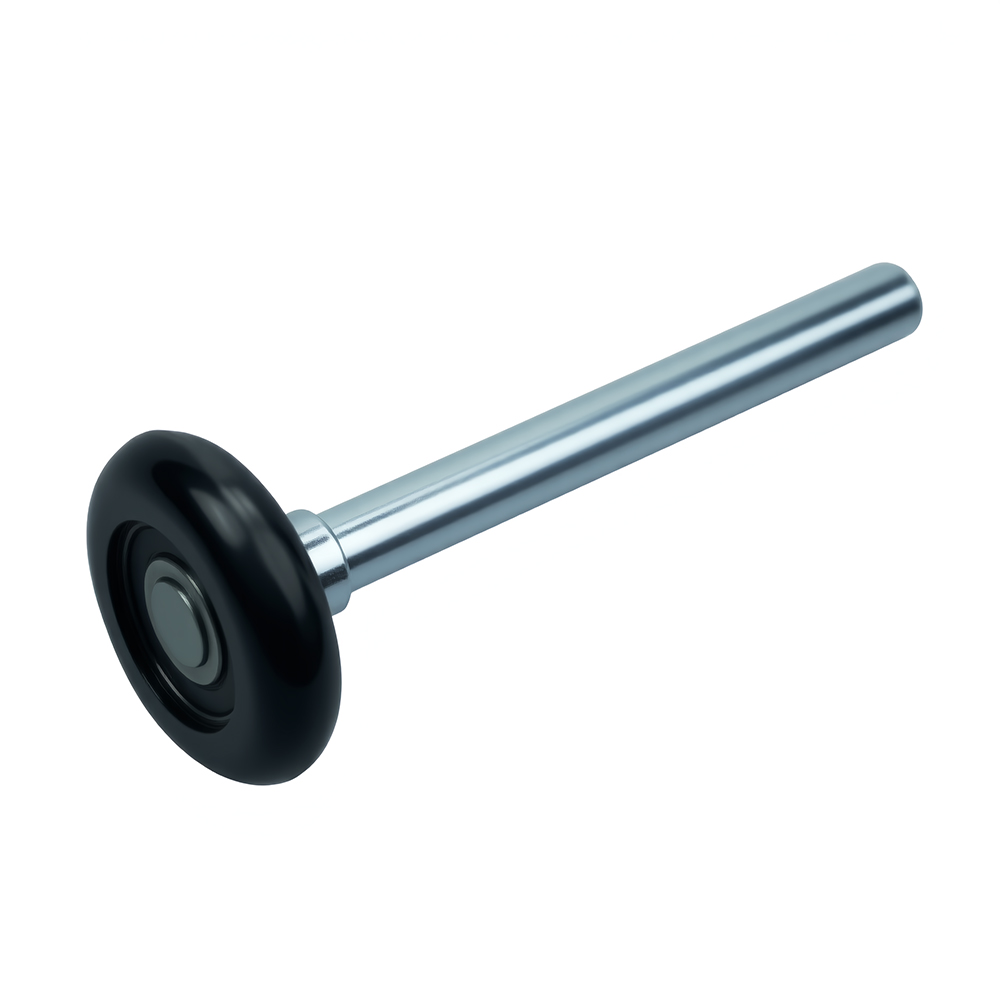
Mechanical Behavior and Durability Assessment of Nylon Wheel Rollers in Sliding Door Mechanisms
Introduction
In sliding garage door assemblies, nylon wheel rollers are essential for ensuring smooth, reliable movement along the track. Their mechanical function affects not only operational efficiency but also the longevity and maintenance demands of the door system. Compared to metallic rollers, nylon wheels typically offer reduced friction and quieter operation, yet their performance is highly dependent on bearing condition and environmental exposure. Particularly in dust-intensive workshop environments, abrasive contaminants accelerate degradation processes that compromise roller function. This article presents an engineering evaluation of nylon wheel rollers, emphasizing the predominant failure mode of bearing wear leading to rolling resistance increase. The discussion integrates mechanical load considerations, failure mechanisms, and validation through recognized endurance test standards, providing insights for engineers tasked with design verification and durability optimization.
Mechanical Principles & Load Behavior
Nylon wheel rollers serve as the mechanical interface transmitting the garage door’s weight and operational forces into controlled rolling motion along the track. Typically, the roller consists of a nylon wheel mounted on a precision bearing assembly, often incorporating seals to mitigate contamination ingress. Nylon is selected for its low friction coefficient, wear resistance, and capacity to accommodate minor misalignments without damaging the metal track. The mechanical loads acting on the roller include static forces from the door’s weight—commonly between 50 and 150 kilograms per roller—and dynamic forces generated during door acceleration, deceleration, and lateral shifts caused by uneven track or wind loads.
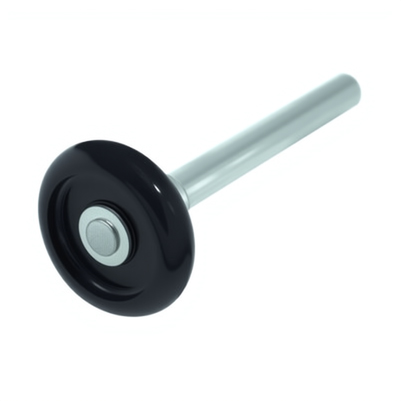
The bearing within the roller is critical in minimizing rolling resistance by supporting radial and axial loads and enabling free rotation of the nylon wheel. Bearings in these applications typically employ sealed ball bearing designs to balance friction reduction with contamination protection. Under cyclic loading conditions, especially in operational environments with frequent door cycles, bearing components experience fatigue stresses that can lead to surface degradation. The nylon wheel itself must resist compressive stresses without significant deformation, as dimensional changes can alter the contact geometry with the track, increasing friction and accelerating wear.
In environments characterized by airborne dust and particulate matter, such as busy workshops, abrasive particles can penetrate bearing seals, promoting accelerated wear. This contamination increases rolling resistance and can cause uneven roller rotation, impacting door alignment. The mechanical design challenge lies in optimizing bearing sealing to prevent ingress while maintaining lubrication flow and minimizing frictional losses. Additionally, nylon’s mechanical properties, including its modulus of elasticity and thermal expansion coefficient, influence performance stability under temperature variations common in workshop settings. Maintaining dimensional stability and surface integrity of the nylon wheel is essential for consistent door movement and alignment over time.
Failure Modes
Primary Failure: Bearing Wear Leading to Increased Rolling Resistance
The most critical failure observed in nylon wheel rollers is bearing wear, which directly contributes to increased rolling resistance and compromised door alignment. Bearings subjected to continuous cyclic loading in dust-laden environments undergo abrasive wear mechanisms, including pitting and spalling of the raceways and rolling elements. Over time, this leads to deformation of bearing surfaces, increasing frictional torque and requiring higher drive forces to maintain roller rotation. The elevated friction not only burdens the door’s motor or manual operation but also causes uneven roller movement, which manifests as door misalignment, binding, or jamming.
This failure mode is exacerbated when lubrication is insufficient or when bearing seals fail, allowing dust and debris to infiltrate the bearing assembly. Abrasive particles trapped within the bearing act as grinding media, accelerating degradation of hardened steel components. The resulting increase in rolling resistance is a primary indicator of bearing wear and serves as a key parameter in endurance testing and condition monitoring. From an engineering perspective, addressing this failure mode requires careful selection of bearing types, seal designs, and lubrication strategies tailored to the dust-intensive workshop environment.
Secondary Failure: Nylon Wheel Surface Abrasion and Micro-Cracking
While nylon is generally resistant to wear, secondary failure modes involve surface degradation of the wheel itself. Embedded contaminants or abrasive particles can cause surface abrasion, altering the wheel’s geometry and increasing friction. Repeated mechanical stress cycles induce micro-cracks within the nylon material, which can propagate and lead to surface fragmentation or localized deformation. Such damage compromises the wheel’s ability to maintain smooth contact with the track, further destabilizing door alignment and increasing operational noise.
The progression of micro-cracking is influenced by environmental factors such as temperature fluctuations, which affect nylon’s toughness and fatigue resistance. Over time, these surface defects reduce the effective service life of the roller and necessitate replacement to avoid cascading failures in the door system.
Environmental Effects: Impact of Dust and Temperature Variations
Dust-intensive workshop environments impose significant challenges on nylon wheel roller durability. Fine particulate matter readily infiltrates bearing seals, accelerating abrasive wear mechanisms and contaminating lubrication. The presence of dust increases the likelihood of bearing surface damage, which directly correlates with rolling resistance increase and premature failure.
Temperature variations typical in workshop settings further influence material behavior. Elevated temperatures can soften nylon, lowering its modulus and increasing susceptibility to deformation under load. Conversely, low temperatures may embrittle the material, facilitating crack initiation and propagation. Thermal cycling can induce dimensional changes in the nylon wheel, potentially affecting track engagement and alignment stability. These environmental stresses combine to reduce the operational lifespan of nylon wheel rollers and complicate maintenance planning.
Testing Standards & Validation
Validation of nylon wheel roller performance under representative operational conditions is essential to ensure reliability and safety. Endurance testing conducted in accordance with ASTM F2200 (Standard Specification for Garage Door Hardware) provides a rigorous framework for assessing cyclic load tolerance, frictional behavior, and dimensional stability. This standard specifies test protocols simulating repetitive door opening and closing cycles, measuring changes in rolling resistance and inspecting bearing and wheel condition throughout the test duration.
Complementing ASTM F2200, ANSI/DASMA 102 outlines hardware durability and safety requirements, emphasizing the importance of bearing integrity and smooth roller operation. Testing under this standard often includes exposure to dust contamination and temperature cycling to replicate challenging workshop environments accurately.
Additionally, UL 325 (Standard for Door, Drapery, Gate, Louver, and Window Operators and Systems) mandates safety and mechanical performance criteria, including assessments of component wear and failure modes relevant to nylon wheel rollers. Incorporating these standards into validation procedures ensures that rollers meet stringent industry benchmarks for mechanical durability and operational safety.
Endurance tests typically involve continuous cycling of the door assembly under controlled load and environmental conditions, with periodic inspections focusing on bearing wear progression, roller surface condition, and frictional torque measurements. Data collected from these tests inform design refinements, material selection, and maintenance scheduling to mitigate the primary failure mode of bearing wear and rolling resistance increase.
Application & Integration
Successful integration of nylon wheel rollers into garage door systems requires meticulous attention to load distribution, track compatibility, and environmental protection strategies. Proper alignment during installation is paramount to minimize lateral loads that exacerbate bearing wear and accelerate failure. The selection of bearing type—sealed ball bearings versus open roller bearings—significantly influences contamination susceptibility and maintenance frequency, particularly in dust-intensive workshop environments.
Material formulation for the nylon wheel must balance hardness and toughness to resist abrasion while maintaining low frictional characteristics. Reinforcements such as glass fibers can improve dimensional stability and wear resistance but may introduce increased noise levels, which must be considered in design trade-offs. Bearing seals should be engineered to prevent dust ingress effectively without impeding lubrication flow, preserving low rolling resistance.
In harsh workshop settings, additional protective measures—such as track covers, controlled air filtration, or localized dust extraction—can substantially extend roller service life. Regular inspection and lubrication schedules, guided by ASTM and ANSI standards, enable early detection of bearing wear and prevent failure escalation. Monitoring rolling resistance changes provides a practical metric for maintenance timing.
The mechanical performance of nylon wheel rollers directly affects door alignment stability. Progressive bearing degradation increases rolling resistance, resulting in uneven door movement that can cause binding, misalignment, or operational noise. Ensuring roller integrity through informed design, rigorous testing, and proactive maintenance is vital for reliable door function in demanding environments.
Nylon wheel rollers are fundamental to the mechanical performance and alignment stability of sliding garage doors, especially within dust-intensive workshop environments. Bearing wear remains the primary failure mode, driving increases in rolling resistance that compromise smooth operation and accelerate system degradation. Validation through endurance test standards such as ASTM F2200 and ANSI/DASMA 102 is critical to confirm durability under realistic conditions. Effective application demands careful material selection, bearing sealing design, and environmental mitigation to balance low friction with contamination resistance. Understanding these mechanical and environmental interactions enables engineers to enhance roller reliability, reduce maintenance frequency, and extend service life in challenging operational contexts.
This analysis was reviewed by a Senior Garage Door Hardware Engineer with practical field experience under dust-intensive workshop environment operating conditions, with validation focused on bearing wear / rolling resistance increase in accordance with endurance test compliance requirements.
For engineering teams responsible for nylon wheel roller, the most robust designs are those that explicitly incorporate dust-intensive workshop environment environmental factors into material selection, document performance evidence against endurance test, and maintain traceable validation records that align with ANSI, ASTM, and UL expectations for garage door hardware.

 English
  Русский
  日本語
日本語  한국어
한국어  Français
  Deutsch
  العربية
  Português
  Español