
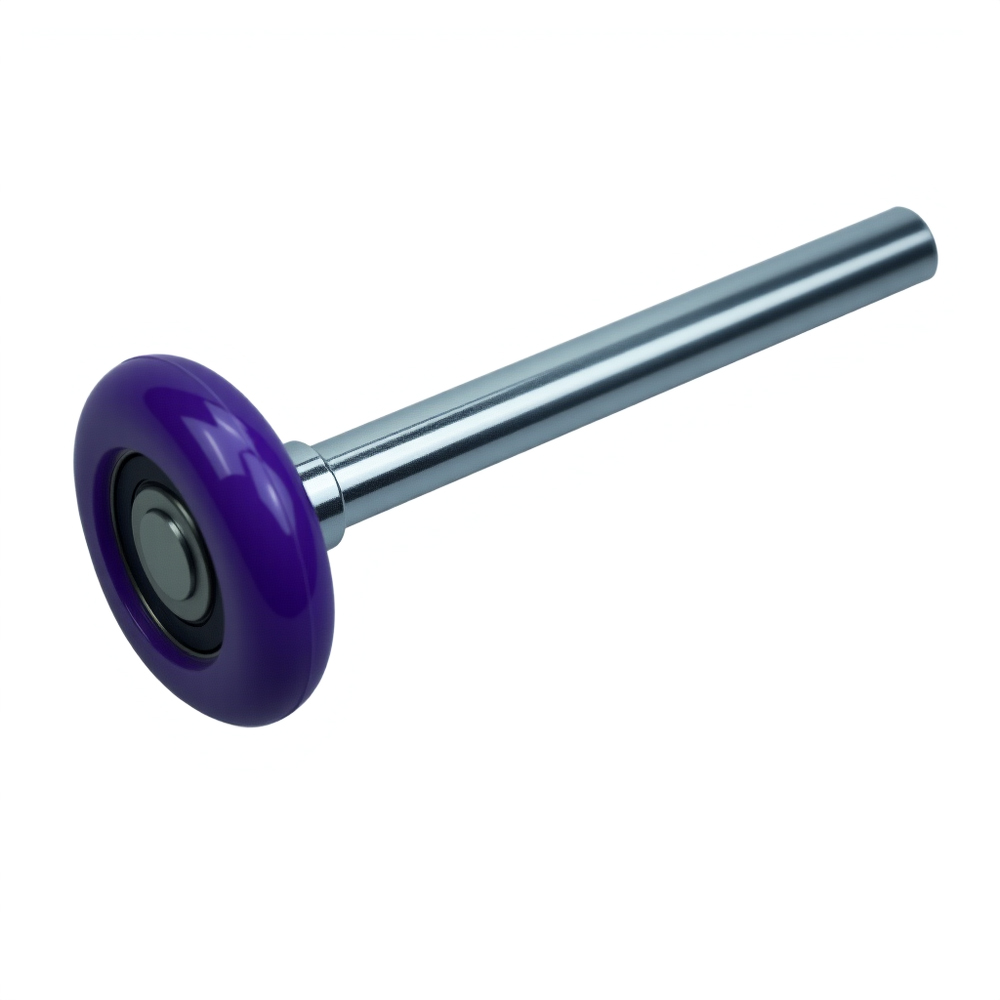
Choosing roller bearings for high-frequency commercial doors under noise, contamination, and misalignment pressure
Noise, binding, or seized rollers on busy loading-bay doors usually trace back to seal choice and lubrication retention rather than basic size mismatch. In high-traffic commercial doorways with frequent cycling, dust from forklifts, occasional water splash, and temperature swings, bearing selection determines whether rollers stay quiet and smooth or turn into a recurring service issue.
Why bearing choice matters more as cycle counts rise
In low-use environments, many roller bearings appear interchangeable as long as dimensions fit the track and shaft. Once doors begin cycling dozens or hundreds of times per day, small differences in bearing construction accumulate into measurable wear. Side-load from track misalignment, vibration during rapid open-close cycles, and airborne debris all compound stress at the raceway and cage.
For installers and facility teams responsible for uptime, the practical question is not whether a bearing can rotate when new, but how consistently it maintains low torque and stable noise after thousands of cycles in a dusty, occasionally wet loading bay. That distinction frames every selection decision discussed below.
Understanding duty profile before selecting roller bearings for high-frequency commercial doors
High-frequency doors impose a predictable duty profile that should guide bearing choice. Cycle rate is the first variable: a door opening every few minutes creates heat buildup and lubricant shear that never appears in occasional-use doors. Load is the second variable, influenced by door weight and the side forces created by imperfect track alignment. Environmental exposure completes the picture, introducing dust, splash water, and temperature variation.
When these factors are mapped together, it becomes clear why open bearings that feel smooth on the bench often degrade quickly in service. Selection starts by matching bearing construction to this combined duty profile rather than treating each factor in isolation.
Seal types and contamination control trade-offs
Seal configuration is one of the most visible differences between bearing options. Open bearings minimize rotational drag but provide no barrier against dust or moisture. Shielded bearings reduce direct particle entry while still allowing some airflow, but fine debris and washdown moisture can still migrate into the raceway over time.
Fully sealed bearings prioritize contamination resistance by retaining grease and excluding debris. In high-frequency commercial doors, this trade-off usually favors sealed designs, as lubricant stability and debris exclusion matter more than marginal reductions in starting torque. The key is selecting seals that maintain flexibility over temperature swings so friction does not spike as conditions change.
Material choice and corrosion considerations
Bearing steel performs well in dry, controlled environments, but loading bays rarely stay dry or clean. Occasional water splash and condensation can initiate corrosion pitting, which then amplifies noise and accelerates wear. Stainless bearing options mitigate corrosion risk, but they can differ in hardness and load capacity compared to standard bearing steel.
The decision often comes down to exposure frequency. If washdown or persistent moisture is part of the environment, corrosion resistance becomes a functional requirement rather than a premium upgrade. Where moisture is only incidental, protected steel bearings with effective sealing may remain viable.
Lubrication retention under repeated cycles
Grease selection and retention define how long a bearing remains quiet under high-cycle use. Repeated rotation shears lubricant, while vibration and heat encourage migration away from the contact zone. Bearings intended for frequent cycling use grease formulations designed to maintain film strength without excessive drag.
Inadequate lubrication leads to metal-to-metal contact, which presents first as increased noise before progressing to rough running or seizure. Selecting a bearing that retains grease under vibration and moderate heat is one of the most reliable ways to extend service intervals.
Side-load tolerance and track misalignment
Commercial door tracks are rarely perfect. Small alignment errors introduce side-load that standard bearings may not tolerate over time. Raceway wear accelerates when loads are uneven, and cages experience additional stress during rapid directional changes.
Bearings with robust cage design and appropriate internal clearance handle these realities better. While correcting track alignment is always recommended, bearing selection should assume some level of persistent side-load in real installations.
Failure symptoms as selection feedback, not scare tactics
Common failure symptoms include rising noise levels, intermittent binding, and eventually seized rollers. These outcomes usually stem from grease washout, contamination ingress, or raceway wear caused by side-load. The value of understanding these failure modes lies in prevention rather than alarm.
When a facility sees repeated roller replacements, it signals that bearing specification does not match actual operating conditions. Adjusting seal type, lubrication, or material choice typically resolves the pattern without changing door hardware.
How testing validates bearing choices in real environments
Engineering validation provides a practical way to compare options beyond catalog claims. Dimensional accuracy inspection confirms proper fit between roller, bearing, and shaft, reducing unintended preload. Rotational torque and noise checks establish a baseline for smooth operation.
Cycle life testing simulates repeated open-close duty, revealing how lubrication and seals behave over time. Contamination exposure checks, involving dust and water splash, show how well bearings retain grease and resist ingress. Where corrosion resistance is critical, salt spray or equivalent aging tests help differentiate material options.
These test methods mirror the conditions found in high-traffic commercial doorways and provide measurable confidence that selected bearings will perform as expected.
Maintenance expectations and service planning
No bearing is truly maintenance-free, but proper selection reduces intervention frequency. Sealed bearings with stable lubrication typically extend inspection intervals and minimize emergency service calls. When maintenance windows are limited, prioritizing contamination resistance and lubricant retention pays off.
Installers and facility managers benefit from aligning bearing choice with realistic maintenance capabilities rather than idealized schedules.
How this selection guide fits into broader roller decisions
Bearing choice is one element of a complete roller specification that also includes wheel material, diameter, and shaft interface. For teams evaluating full roller assemblies and broader purchasing considerations, a more comprehensive overview is available in the complete buyer guide for custom garage door rollers, which places bearing decisions in the context of overall roller design and sourcing.
Standards, validation, and long-term reliability
Reliable performance in high-frequency commercial doors depends on validating bearings against realistic conditions. Dimensional accuracy inspection ensures correct fit, while rotational torque and noise checks confirm smooth operation at installation. Cycle life testing and contamination exposure evaluations link laboratory results to loading-bay realities.
By anchoring selection to these test methods, installers and buyers gain a shared, measurable understanding of what durability means in practice, rather than relying on assumptions or short-term impressions.
This content is developed based on material performance analysis, standardized industry testing references such as dimensional accuracy inspection, cycle life simulation, contamination exposure checks, and corrosion resistance evaluations, along with real-world application scenarios found in high-traffic commercial doorways with frequent cycling, dust, and moisture exposure. Specifications and validation approaches reflect common industry practices rather than theoretical assumptions.
When roller bearings for high-frequency commercial doors are selected with seal integrity, lubrication stability, and side-load tolerance in mind, the engineering advantages of smooth travel and extended service intervals remain consistent even as operating conditions fluctuate. Treating contamination and wear risks as design inputs, and verifying choices through appropriate testing, turns bearing selection into a controllable decision rather than a recurring maintenance problem.
 English
  Русский
  日本語
日本語  한국어
한국어  Français
  Deutsch
  العربية
  Português
  Español