
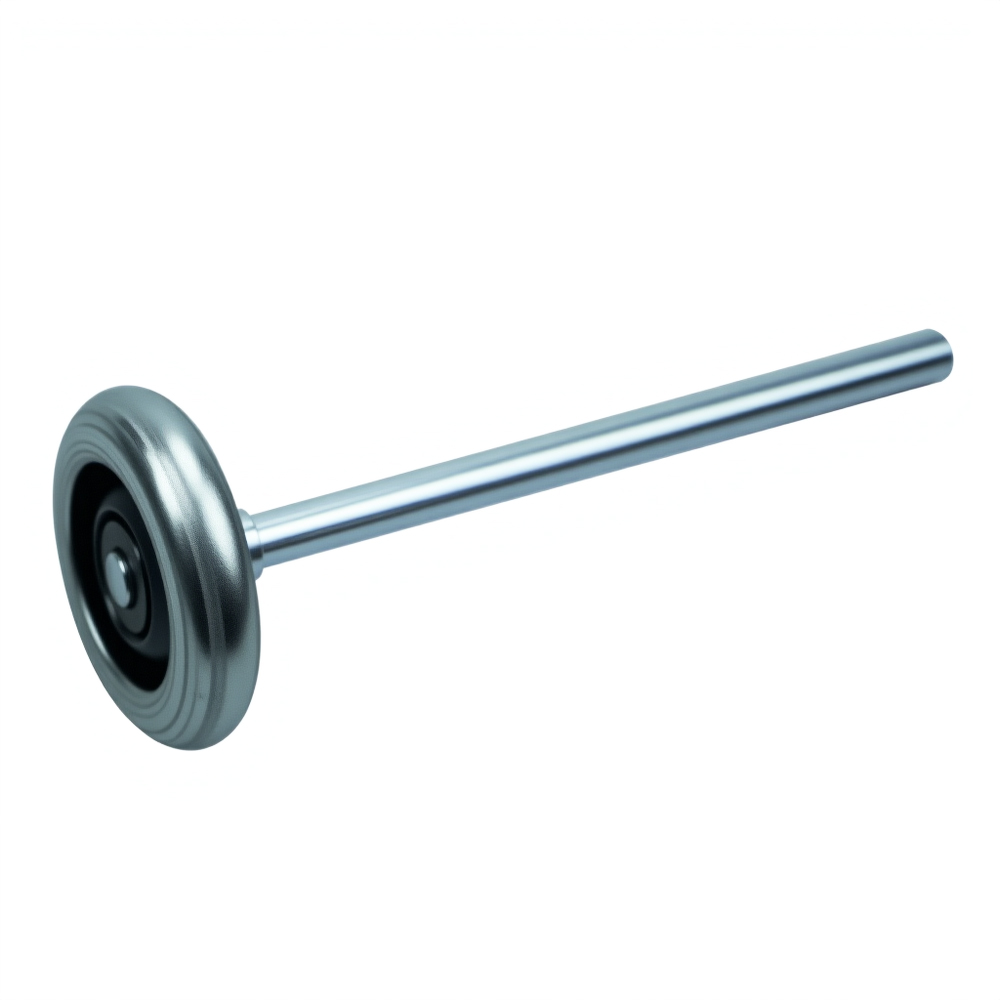
Rolling-friction reliability of steel roller wheels in sliding door systems
In sliding door assemblies, steel roller wheels play a pivotal role in maintaining alignment and reducing operational noise. Their engineering directly influences durability and system smoothness, making them essential for door alignment engineers seeking optimal performance and longevity.
This technical overview explores the rolling-friction behavior of steel roller wheels, addressing the challenges of noise, wear, and alignment stability in demanding sliding door applications.
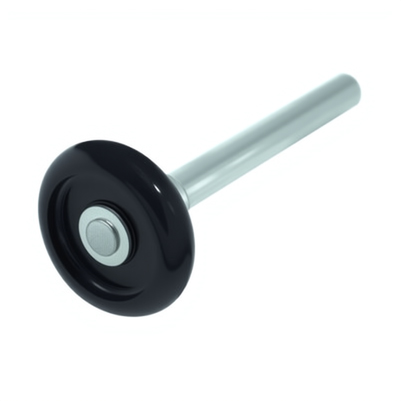
In sliding door assemblies, the operational integrity and service life are highly dependent on the rolling components that facilitate movement along the track. Steel roller wheels, as the primary interface between the door and its guide rail, are central to the system’s ability to maintain alignment and minimize operational disturbances. For door alignment engineers, the persistent challenges of noise generation and accelerated wear—often stemming from frictional inconsistencies or misalignment—demand a technical evaluation of rolling-friction behavior. This analysis systematically examines the construction, frictional dynamics, and long-term reliability of steel roller wheels, with a focus on their impact on noise control and alignment stability. The following sections provide a detailed exploration of the engineering principles and performance metrics relevant to these components, guiding technical decisions for optimal system smoothness and durability.
Steel roller wheels are engineered to provide a low-resistance rolling interface, supporting the weight of sectional or sliding doors while confining lateral movement within the track geometry. The core structure typically consists of a hardened steel outer race, precision ball or needle bearings, and a steel hub or axle interface. The wheel profile is often contoured to match the track’s cross-section, ensuring consistent point or line contact and reducing the risk of skewing or derailment. Material selection is critical: high-carbon or alloy steels are favored for their fatigue resistance, surface hardness, and ability to withstand repeated stress cycles without significant deformation.
The mechanical design of steel roller wheels prioritizes the minimization of rolling friction, which is achieved by optimizing the bearing configuration and surface finish. Ball bearings are commonly used due to their low rolling resistance and ability to accommodate both radial and axial loads. The bearing raceways are ground to fine tolerances, and the balls are typically made from hardened chrome steel to resist pitting and brinelling. Lubrication—either sealed-for-life or serviceable grease chambers—plays a vital role in maintaining low friction coefficients and preventing abrasive wear. The wheel’s outer surface is often polished or case-hardened to further reduce frictional drag against the track, contributing to quieter operation and extended service intervals.
In practical sliding and alignment scenarios, the interaction between the steel roller wheel and the track is subject to a combination of normal and tangential forces. Proper alignment ensures that the load is distributed evenly across the bearing elements, minimizing localized stress concentrations that can lead to premature wear or noise generation. Misalignment, conversely, introduces side-loading and uneven contact, increasing the risk of flat-spotting, bearing cage distortion, and elevated frictional losses. For door alignment engineers, precise installation and periodic verification of track geometry are essential to maintaining the intended rolling behavior.
Reliability in steel roller wheels is fundamentally linked to their ability to sustain low rolling friction and resist degradation over extended duty cycles. The primary failure modes—bearing fatigue, surface spalling, and excessive noise—are directly correlated with frictional heat generation and abrasive particle ingress. Engineers must assess the hardness and microstructure of the steel, as well as the sealing effectiveness of the bearing assembly, to predict service life accurately. Noise, a critical pain point in door alignment systems, is often a symptom of increased friction or surface irregularities. High-frequency vibrations can propagate through the door structure, resulting in audible disturbances and user dissatisfaction.
To address these issues, advanced surface treatments such as induction hardening or nitriding are employed to enhance wear resistance. The bearing seals are designed to exclude contaminants while retaining lubricants, further mitigating the risk of friction-induced degradation. For high-cycle environments, engineers may specify roller wheels with increased ball count or larger diameter bearings to distribute loads more effectively and reduce contact stresses. Quantitative evaluation of rolling friction is typically performed using torque measurement under controlled loading, with acceptable coefficients of rolling resistance falling in the range of 0.001–0.005 for precision steel assemblies.
The evaluation of steel roller wheel performance extends beyond material and geometric considerations to encompass operational variables such as track cleanliness, environmental exposure, and maintenance practices. Contaminants such as dust, grit, or moisture can infiltrate the bearing assembly, increasing abrasive wear and elevating frictional torque. Door alignment engineers should implement regular inspection protocols, focusing on wheel rotation smoothness, axial play, and audible noise during operation. Any deviation from baseline performance—such as increased resistance or irregular sounds—may indicate the onset of bearing degradation or misalignment, warranting immediate corrective action.
A critical aspect of friction control is the interface between the wheel and the track. Surface roughness and hardness of the track material must be compatible with the steel roller wheel to avoid galling or micro-welding under high loads. Engineers may recommend periodic track cleaning and, where feasible, the application of compatible lubricants to the running surface. In environments with elevated humidity or corrosive agents, stainless steel or coated roller wheels may be specified to prevent rust-induced friction increases.
Quantitative evaluation of noise and wear is essential for validating the reliability of steel roller wheels in sliding door systems. Noise measurement is typically conducted using accelerometers or contact microphones placed at strategic points on the door and track assembly. Engineers analyze the frequency spectrum of operational noise to distinguish between rolling, sliding, and impact-induced sounds. Elevated noise levels in the 1–5 kHz range often indicate bearing or surface wear, while lower-frequency rumble may suggest misalignment or track irregularities. Wear assessment involves direct measurement of wheel diameter, bearing clearance, and surface pitting using precision calipers and profilometers. A progressive increase in radial play or a decrease in wheel roundness is a clear indicator of friction-induced deterioration.
From a durability assessment perspective, accelerated life testing—such as repeated cycling under load—provides valuable data on the long-term behavior of steel roller wheels. Engineers monitor changes in rolling resistance, noise, and wear patterns over thousands of cycles to establish maintenance intervals and predict service life. Test results inform the specification of material hardness, bearing design, and lubrication intervals, ensuring that the roller wheels meet the demanding requirements of high-usage sliding door installations.
For door alignment engineers, the technical evaluation of steel roller wheels is not limited to initial specification but extends to ongoing verification and adjustment. Routine inspection of wheel condition, bearing integrity, and track alignment is essential to prevent the escalation of noise and wear issues. Engineers should verify that roller wheel parameters—such as diameter, bearing type, and material hardness—conform to engineering-grade safety and performance standards. Any observed deviation from expected rolling-friction behavior should prompt a root-cause analysis, with corrective measures implemented to restore optimal system function.
In summary, the reliability of steel roller wheels in sliding door systems is governed by a complex interplay of material properties, bearing design, alignment precision, and maintenance practices. Friction control remains the central factor in minimizing noise and wear, directly impacting user satisfaction and system longevity. Door alignment engineers are advised to implement a rigorous program of parameter verification and operational monitoring, ensuring that all components function within their engineered tolerances. Through systematic evaluation and proactive maintenance, the core pain points of noise and wear can be effectively managed, delivering smooth and durable performance in demanding sliding and rolling applications.
Optimizing steel roller wheels for long-term sliding door reliability
For further technical insights on steel roller wheels, including rolling-friction analysis, durability testing, and best practices for noise reduction, engineers can refer to the Load Testing for Rollers and Technical Documentation provided by Baoteng. Regular evaluation and maintenance of steel roller wheels are key to ensuring alignment stability and minimizing operational disturbances in sliding door systems.
 English
  Русский
  日本語
日本語  한국어
한국어  Français
  Deutsch
  العربية
  Português
  Español