
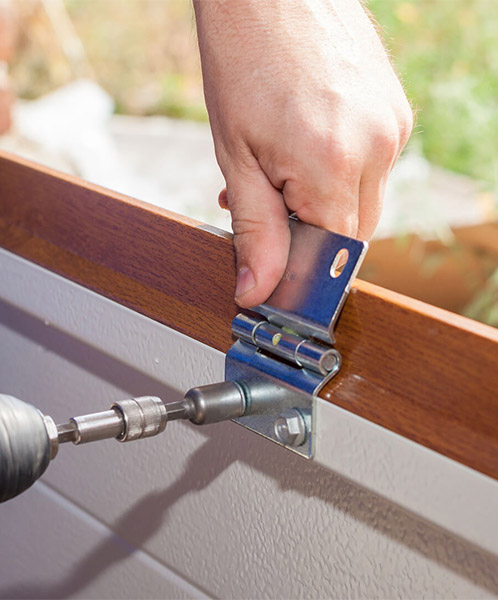
Engineering reliability of stainless steel hinge in garage door center hinge articulation
Ensuring the durability of a stainless steel hinge as a garage door center hinge is fundamental to the smooth, long-term operation of sectional overhead doors. This analysis explores how stress concentration and fatigue resistance are managed in these critical components, supporting the structural performance required for demanding garage door applications.
Reliability of stainless steel hinge in garage door center hinge applications
The use of stainless steel hinge components as garage door center hinges plays a pivotal role in the articulation and sectional movement of modern overhead doors. For door system designers, the integrity and reliability of these hinges are central concerns, particularly given the recurring mechanical loads imposed during operation. A critical challenge in this context is the tendency for stress concentration at hinge locations, which can precipitate fatigue and compromise long-term performance. This technical assessment examines how stainless steel center hinges manage stress dispersion during sectional articulation, evaluates their fatigue resistance, and offers engineering-based recommendations for verifying hinge suitability in demanding applications.
The structural configuration of a garage door system relies on the precise articulation of its sectional panels, with each center hinge acting as a fulcrum for movement. Stainless steel, as a material choice, offers a combination of high yield strength, corrosion resistance, and favorable fatigue properties. These characteristics are essential in environments where doors are subject to frequent cycling and variable loads. The hinge geometry, including knuckle diameter, leaf thickness, and pin design, directly influences how stresses are distributed across the hinge-body and adjoining door sections.
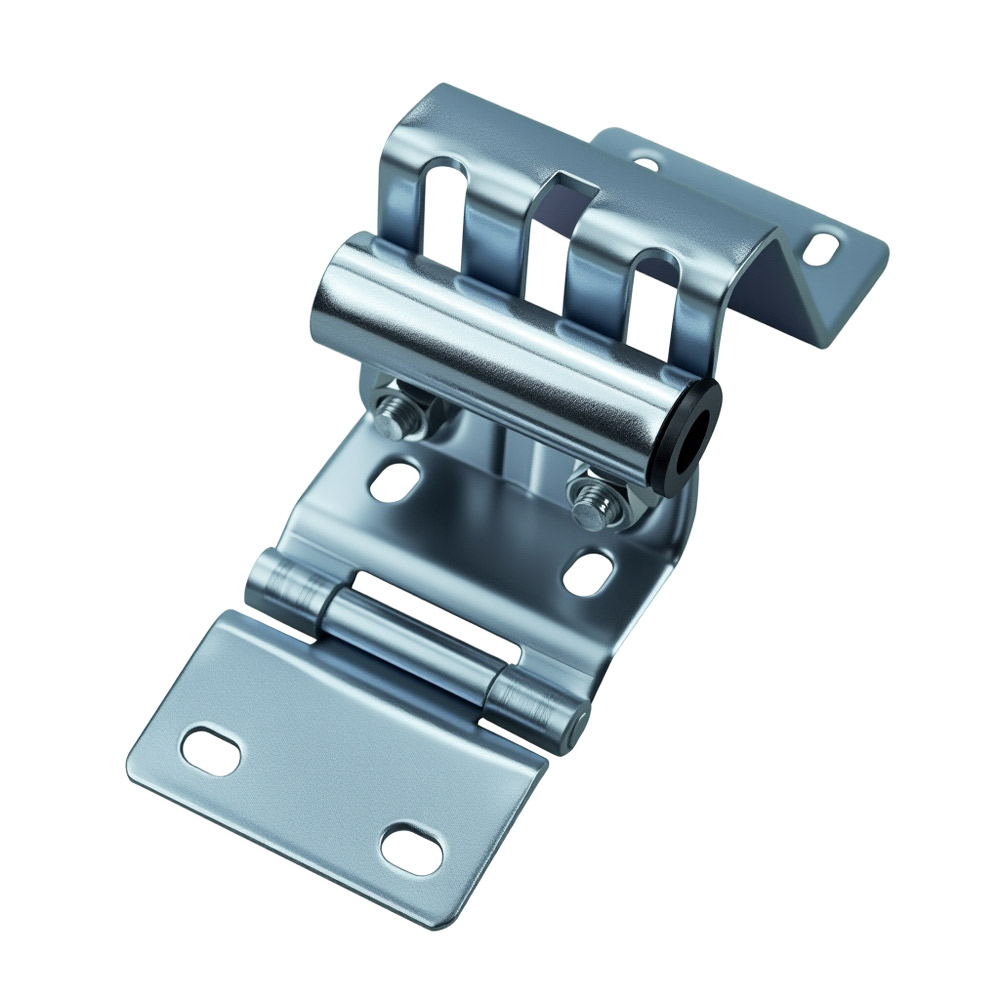
When the door transitions between open and closed positions, the center hinge experiences a combination of bending, shear, and bearing stresses. The articulation process causes the hinge to act as a localized transfer point for panel loads, especially at the mid-span of each section. If the hinge design does not adequately disperse these stresses, localized plastic deformation or microcracking can initiate, leading to premature fatigue failure. The selection of stainless steel mitigates some of these risks due to its superior endurance limit compared to carbon steel or zinc-plated alternatives. However, the mechanical performance is not solely material-dependent; the hinge’s interface with the door panel, fastener pattern, and manufacturing tolerances all impact stress concentration factors.
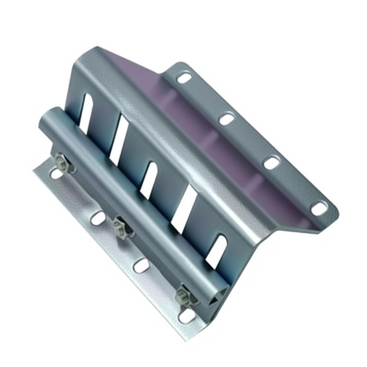
Reliability in the context of garage door center hinges is best quantified through a combination of mechanical test data and field performance observations. Laboratory fatigue testing, typically involving cyclic loading at representative amplitudes, provides insight into the number of cycles to failure for a given hinge configuration. For stainless steel center hinges, endurance limits often exceed 10^6 cycles under nominal loading, provided that stress risers such as sharp corners or insufficient fillet radii are minimized in the design. In field applications, environmental factors—including humidity, temperature fluctuations, and airborne contaminants—can accelerate degradation if the hinge material or protective finish is suboptimal.
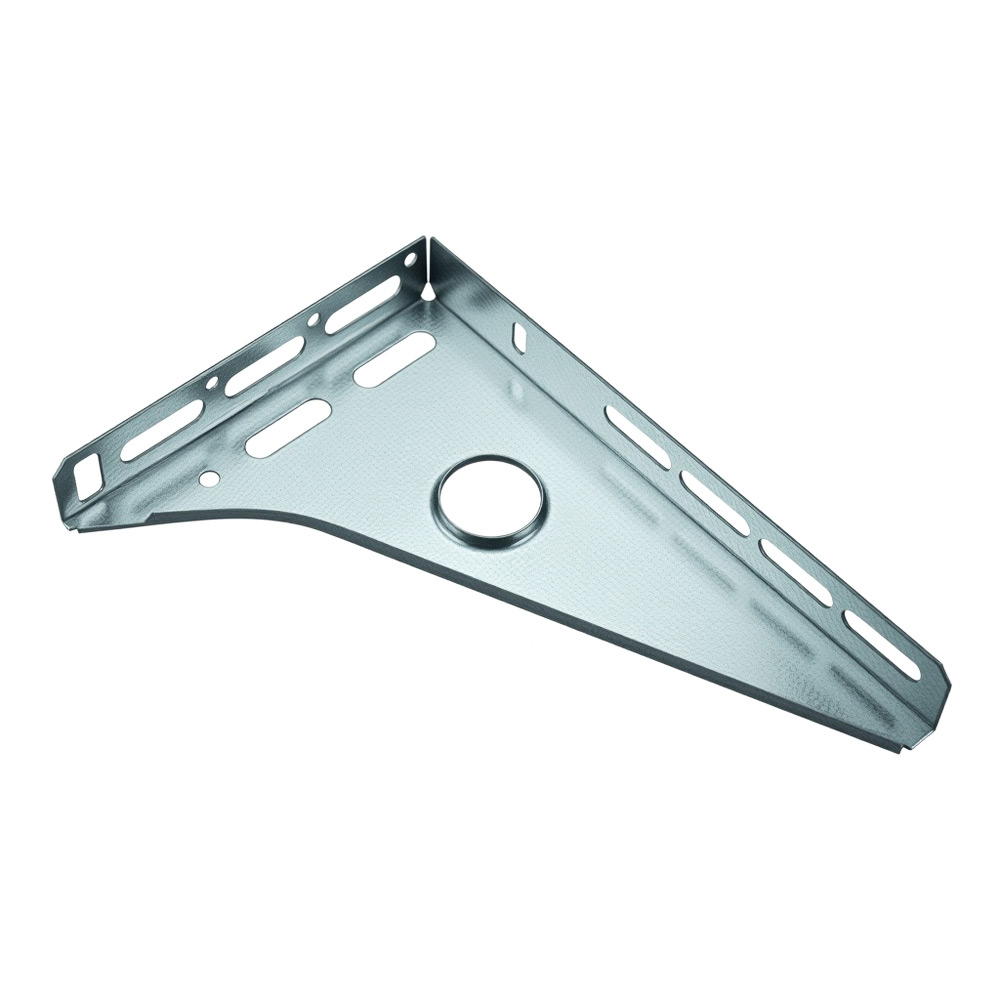
A key aspect of hinge reliability is the articulation mechanism’s ability to distribute stresses evenly across the hinge pin and leaves. Inadequate alignment or improper fastener torque can result in eccentric loading, which amplifies local stress and accelerates wear at the knuckle interface. For sectional doors with high cycle requirements, such as those in commercial or industrial settings, hinge selection must consider not only static load capacity but also the hinge’s ability to resist fatigue under repeated articulation. The use of hardened stainless steel pins and precision-formed knuckles can further reduce the risk of galling and wear, thereby extending service life.
The evaluation of stress concentration at the center hinge location requires a detailed understanding of both global door loading and local hinge geometry. Finite element analysis (FEA) is frequently employed to model the stress distribution during door operation. These simulations reveal that the highest stress concentrations typically occur at the transition between the hinge leaf and knuckle, as well as at fastener holes. To address the core pain point of stress-induced fatigue, hinge designs should incorporate generous radii at these transitions and avoid abrupt changes in cross-section.
Material selection remains central to fatigue resistance. Austenitic stainless steels, such as AISI 304 or 316, are commonly specified for center hinges due to their combination of ductility and corrosion resistance. However, designers must account for the potential of work hardening and the influence of residual stresses introduced during forming or welding. Post-fabrication treatments, such as stress-relief annealing or shot peening, can enhance fatigue life by reducing surface tensile stresses and mitigating crack initiation sites.
In practical terms, the hinge’s interface with the sectional door panel is equally critical. The fastener pattern—typically a combination of through-bolts and self-tapping screws—must be engineered to avoid excessive local bearing stresses. Oversized or misaligned fastener holes can act as stress concentrators, undermining the fatigue performance of even the highest-grade stainless steel hinge. For high-cycle applications, the use of backing plates or reinforcement at the hinge mounting locations is recommended to spread loads more uniformly across the door section.
The operational environment further influences hinge reliability. Stainless steel offers inherent resistance to corrosion, but in coastal or chemically aggressive atmospheres, pitting and crevice corrosion can still occur, particularly at fastener interfaces or in areas where water may accumulate. Periodic inspection and maintenance, including lubrication of the hinge pin and cleaning of debris, are necessary to preserve articulation smoothness and prevent abrasive wear. In automated door systems, monitoring hinge temperature and articulation torque can provide early warning of developing fatigue or misalignment issues.
From a mechanical engineering perspective, the ultimate goal is to achieve a hinge design that minimizes stress concentration and maximizes fatigue resistance throughout the expected service life of the door system. This requires an integrated approach, combining material selection, geometric optimization, precise manufacturing, and robust installation practices. Door system designers should specify hinges with documented fatigue test results, appropriate safety factors, and clear guidelines for installation and maintenance.
Evaluation of hinge performance must be ongoing, incorporating both laboratory data and field feedback. Regular review of hinge condition, especially at high-cycle installations, is essential to detect early signs of fatigue, such as visible deformation, surface cracking, or increased articulation resistance. Where stress concentration remains a concern, design modifications—such as increasing leaf thickness, optimizing knuckle diameter, or employing advanced stainless steel alloys—should be considered based on quantitative engineering analysis.
For door system designers focused on structural integrity, the verification of hinge parameters against engineering-grade safety standards is non-negotiable. This includes confirming material certifications, reviewing fatigue test reports, and validating installation procedures. Where possible, hinge designs should be benchmarked against industry standards such as ANSI/DASMA 102 or EN 13241, with attention to both static and dynamic load requirements.
Ensuring long-term performance of stainless steel hinge,garage door center hinge
In summary, the stainless steel hinge, when properly engineered and installed as a garage door center hinge, provides a robust solution to the challenges of sectional articulation and stress dispersion. However, the core pain point of stress concentration and resultant fatigue remains a central consideration in both design and evaluation. Through rigorous mechanical analysis, careful material selection, and adherence to best installation practices, designers can ensure that hinge performance meets the demanding requirements of modern sectional door systems. Regular technical review and validation against established safety standards are essential steps in maintaining long-term reliability and structural integrity in these critical components.
For additional technical resources on garage door hardware, including fatigue testing, installation guidelines, and product certifications, refer to the Baoteng technical documentation and corrosion resistance for hinges pages.
 English
  Русский
  日本語
日本語  한국어
한국어  Français
  Deutsch
  العربية
  Português
  Español