
Why Do Steel Garage Door Rollers Squeak and Jam? The Physics of Zinc Failure
Reference Standard: ASTM B117 (Standard Practice for Operating Salt Spray Apparatus) / ISO 12944 (Corrosion Protection of Steel Structures)
Short Answer
Sacrificial Anode Kinetics and Surface Topography Degeneration
In demanding industrial or coastal residential environments, the performance of a galvanized steel roller is dictated by the chemical health of its protective boundary. While most maintenance logs simply list “rust” as a failure mode, the true physical catalyst is the non-uniform depletion of the zinc coating through Sacrificial Anode Kinetics.
Mechanism Dissection:
Electroplated zinc (White or Yellow Zinc) functions as a sacrificial anode, meaning it possesses a higher oxidation potential than the underlying cold-rolled steel. In the presence of moisture and airborne chlorides, an electrolytic cell is established on the roller’s surface. Zinc atoms are selectively stripped from the lattice and converted into zinc oxide (“white rust”). However, this depletion is rarely uniform.
Because of microscopic variations in the steel’s surface energy and the electrolyte’s concentration, the zinc layer erodes to create “micro-craters.” This degradation fundamentally alters the roller’s Surface Topography. As the roller traverses the steel track, these micro-craters break the tangential contact equilibrium. Instead of a smooth, laminar rolling motion, the roller experiences microscopic stick-slip oscillations. These oscillations translate into high-frequency acoustic resonance, manifesting as the piercing, high-pitched metallic screech that signifies a compromised protective shield.
Extreme Stress Timeline Modeling:
To quantify this topographic collapse, we subject a standard 2-inch steel roller to an accelerated salt fog environment:
* Initial Phase (0-24 Hours NSS): The zinc surface remains largely intact. Surface roughness ($Ra$) is measured at a baseline of 0.8μm. The roller operates at a noise level below 55dB.
* Intermediate Phase (24-48 Hours NSS): Sacrificial depletion reaches 50% depth. Micro-craters begin to nucleate. $Ra$ increases to 2.5μm. Acoustic resonance begins to develop as the uneven topography induces vibration in the track wall.
* Terminal Phase (48+ Hours NSS): The sacrificial anode is exhausted in high-load areas. Red rust (iron oxide) begins to erupt through the iron-zinc alloy layer. Friction coefficients spike by 300%, and the noise level exceeds 85dB as the steel-on-steel grinding initiates.
Cascading Systemic Hazards:
Topographic degeneration does not stay localized. The abrasive iron oxide particulates shed by a corroded roller act as a grinding medium. As these particles accumulate in the track, they begin to erode the replacement metal garage door rollers of other panels, systematically destroying the entire track-roller interface and significantly increasing the mechanical impedance of the door system.
KEY TAKEAWAYS
- White Powder Precipitation: The appearance of fine white powder on the roller face is a definitive sign of active sacrificial anode depletion; the topographic degeneration has already begun.
- Frequency-Shift Squealing: If the noise pitch changes specifically when the door slows down or speeds up, the micro-crater array has reached a critical density, inducing harmonic resonance.
- Surface Pitting Signatures: Visual inspection revealing a “dull grey” mottled appearance indicates the zinc layer is no longer a continuous film, leaving the steel base vulnerable to immediate pitting.
Radial Run-out Distortion Driven by Interference Fit Failure
The “jamming” of a garage door is frequently the macroscopic result of a sub-millimeter geometric anomaly: Radial Run-out Distortion. This occurs when the high-strength steel bearing fails to maintain its concentricity within the cold-rolled steel tire.
Mechanism Dissection:
Inside a high-quality steel ball bearing roller, the outer race of the bearing is held within the roller shell via a high-precision Interference Fit. This fit ensures that the center of mass remains perfectly aligned with the geometric axis of rotation. However, when lubrication is absent or insufficient, the internal ball bearings (whether in a 7, 10, or 11-ball configuration) experience intense localized friction.
This friction generates heat that can cause asymmetric plastic deformation of the bearing raceway. Once the raceway loses its perfect circularity, the roller develops a “wobble.” In engineering terms, this is an escalation of Radial Run-out. As the door operates, this eccentricity causes the center of gravity to shift dynamically. The resulting centrifugal forces induce a non-linear load on the garage door motor. When the run-out exceeds 0.05mm, the roller no longer “rolls” but begins to skid or “cant” against the track, leading to an instantaneous amperage spike in the opener and eventual system lockout or motor burnout.
Thermodynamic Lubrication Breakdown and Asperity Flash Temperatures
The silent killer of steel rollers is the Thermodynamic Lubrication Breakdown. In environments ranging from -20°C to 80°C, the grease inside the bearing undergoes a chemical and physical transformation that renders it useless.
Mechanism Dissection:
Standard lithium-based greases consist of an oil held within a soap fibrous skeleton. Under the high-pressure point contacts (approaching several GPa) found in a garage door roller, the lubricant film thickness must be maintained. However, during the height of summer or in heavy industrial use, the interface between the steel ball and the raceway experiences “Flash Temperatures.” These are instantaneous heat spikes at the microscopic surface peaks (asperities) that can exceed the steel’s tempering temperature. If the grease has a low dropping point, it undergoes saponification syneresis—the oil literally bleeds out of the bearing, leaving behind a hard, abrasive soap residue. This residue acts as a dam, trapping grit and accelerating the asperity fusion that leads to a seized bearing.
High-Density Zinc Fortification and Sealed Labyrinth Sealing Strategy
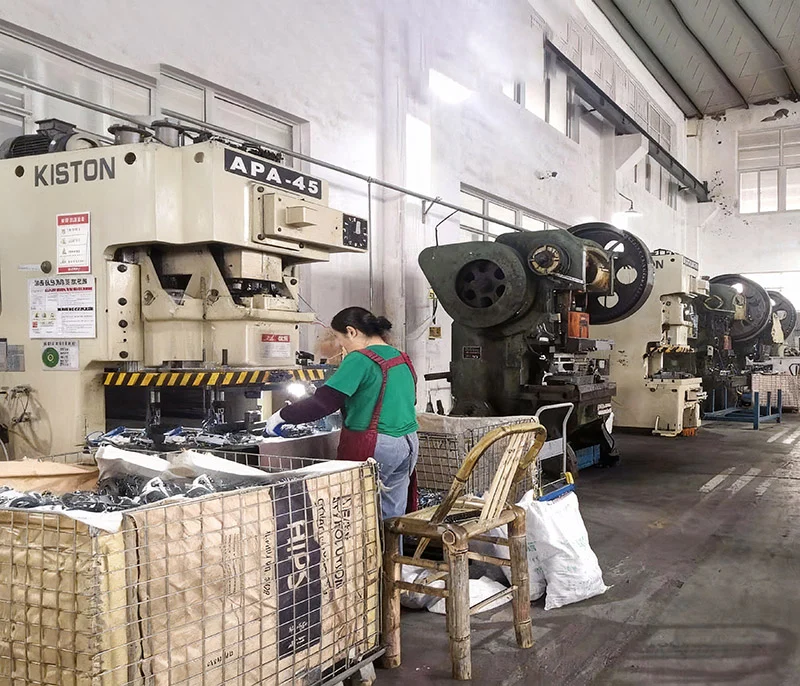
To prevent topographic decay and radial distortion, advanced manufacturing protocols at the factory level move beyond standard plating toward metallurgical fortification and labyrinthine fluid control.
Solution 1: $\geq 8\mu m$ Zinc Fortification with Nano-Sealants
Execution Protocol: The factory abandons the industry-standard 3-5μm plating in favor of a high-density $8\mu m$ or greater zinc deposition. Following the electroplating cycle, the rollers are submerged in a secondary trivalent chromium bath enriched with nano-particle sealants.
Material Expected Evolution: This fortification creates a two-stage defense. The nano-sealant plugs the microscopic pores in the zinc lattice, while the increased thickness provides a significantly larger reservoir of sacrificial material. In NSS testing, these rollers endure over 48 hours without a single trace of red rust. The surface roughness remains stable at $Ra < 1.0\mu m$ for five times longer than budget alternatives, effectively suppressing the high-frequency acoustic resonance that causes squeaking.
Hidden Cost & Side Effect Evasion: Increased plating thickness can alter the bearing’s internal clearances. To evade this, the factory utilizes precision masking of the bearing raceways during the plating process, ensuring that only the external load-bearing tire and stem receive the fortification.
Solution 2: 11-Ball High-Load Radial Balancing
Execution Protocol: Instead of the common 7-ball architecture, the factory integrates a precision 11-ball bearing configuration. Each ball is graded for sphericity within 0.002mm and encased in a high-modulus steel cage.
Material Expected Evolution: By increasing the number of contact points, the individual load per ball is reduced by approximately 35%. This dramatic reduction in Hertzian stress ensures that the Interference Fit remains stable even under the weight of heavy commercial insulated doors. Radial run-out is maintained below a strict 0.03mm threshold, preventing the eccentric vibration that leads to track wear and motor amperage spikes.
Hidden Cost & Side Effect Evasion: More balls can lead to higher internal friction if poorly lubricated. The factory counteracts this by pre-filling each bearing with a specialized high-viscosity synthetic grease that maintains a stable film even at 100°C flash temperatures.
Solution 3: Labyrinth Seal Bearing Architecture
Execution Protocol: To solve the issue of syneresis and environmental contamination, the bearing is enclosed in a “Labyrinth Seal” structure. This design uses a series of interlocking, non-contacting metal or polymer rings to create a tortuous path for fluids and debris.
Material Expected Evolution:
The labyrinth seal utilizes centrifugal force to eject any intruding water or dust before it can reach the bearing’s inner raceway. Unlike a standard rubber seal that can harden and crack, the labyrinth seal provides a permanent mechanical barrier that does not increase friction torque. This ensures the thermodynamic lubrication remains pure, maintaining the critical dropping point of the grease and preventing the “bleeding” that leads to seized rollers.
Hidden Cost & Side Effect Evasion: Labyrinth seals are complex to machine and assemble. The factory utilizes fully automated multi-stage stamping and assembly lines to maintain a high-volume output while ensuring the 0.1mm tolerances required for the labyrinth path are strictly met.
Solution 4: Trivalent Passivation and Yellow Zinc Polymer Coating
Execution Protocol: For extreme coastal deployments, the rollers undergo a trivalent passivation followed by a secondary polymer topcoat over the yellow zinc plating.
Material Expected Evolution: The polymer layer acts as a primary physical barrier, shielding the zinc from the atmosphere. This triples the corrosion resistance of the sacrificial anode. Even if the polymer is scratched, the underlying zinc takes over the protection. This “belt-and-suspenders” approach ensures that the commercial door steel rollers remain silent and functional in environments that would destroy a standard roller in six months.
Hidden Cost & Side Effect Evasion: Polymer coatings can be brittle. The engineering team specifies a UV-stabilized, elastic polymer matrix that can flex with the steel tire under load without delaminating or cracking, maintaining the integrity of the corrosion barrier.
| Performance Variable | Standard 7-Ball Steel Roller | Baoteng 11-Ball Fortified Roller | Industry Standard Benchmark |
|---|---|---|---|
| Zinc Layer Integrity | 3-5μm (Fails at 24h NSS) | $\geq 8\mu m$ (Passes 48h NSS) | ASTM B117 Compliance |
| Radial Run-out Limit | 0.15mm (Motor Strain) | < 0.03mm (Linear Smoothness) | Dynamic Balance Profiling |
| Acoustic Profile | 85dB at Terminal Phase | < 60dB throughout life | ISO 3744 Sound Mapping |
| Dropping Point Stability | 120°C (Grease bleeds) | > 260°C (High-Drop Grease) | ASTM D566 Lubrication Test |
| Mechanical Cycle Life | 15,000 – 25,000 cycles | 100,000+ certified cycles | EN 12604 Cycle Endurance |
PRO-TIP / CHECKLIST
- The “Spin” Diagnostic: With the door halfway open, try to spin the roller with your hand. It should spin with heavy resistance (due to grease viscosity) and come to a smooth stop. If it spins freely or “rattles,” the lubrication has bled out, and the interference fit is compromised.
- Inspect the Stem Junction: Look at the point where the roller stem enters the bearing. If there is a “red ring” of rust here, the galvanic protection has failed at the most critical mechanical joint.
- The Amperage Audit: If your garage door opener is struggling or reversing frequently, measure the motor’s amperage draw. A spike usually indicates that radial run-out in the rollers is forcing the door to bind in the track.
- Confirm Ball Count: Insist on 10-ball or 11-ball architectures for commercial doors. Fewer balls lead to higher Hertzian stress and faster raceway deformation under high-cycle use.
- Check for “Sealed” Markings: Verify if the roller uses a labyrinth seal or a simple open-face bearing. Open bearings in dusty or humid garages will fail 70% faster due to grease contamination.
- Avoid Silicone Sprays on Steel: While popular, thin silicone sprays can actually wash out the heavy lithium grease inside a steel roller bearing. Stick to high-pressure grease specifically designed for ball bearings.
Frequently Asked Questions (FAQ)
how to program a liftmaster garage door opener
To program a LiftMaster opener, press and immediately release the “Learn” button on the motor unit. Within 30 seconds, press and hold the button on your remote control until the opener light flashes, indicating that the rolling code has been synchronized.
how to program garage door to car
First, hold your garage door remote 1-3 inches away from your car’s HomeLink buttons. Simultaneously press and hold both the remote button and the desired car button until the indicator light flashes rapidly. Finally, press the “Learn” button on the opener motor and return to the car to press the programmed button twice to complete the handshake.
how to lubricate garage door rollers
Apply a high-quality lithium-based grease directly into the ball bearing raceway while rotating the roller by hand. Avoid using WD-40 or thin oils, as these act as solvents that can strip the factory-applied high-viscosity grease, leading to rapid “Thermodynamic Lubrication Breakdown” and bearing seizure.
how to program a chamberlain garage door opener
Locate the “Learn” button (usually yellow, purple, or orange) on the back of the Chamberlain motor unit. Press and release it once, then press the button on your remote three times. The motor light will blink once to confirm the programming is successful.
how to manually close garage door
Pull the red emergency release cord (usually hanging from the opener rail) to disconnect the door from the automated carriage. Grasp the door handle and slowly guide the door down to the floor. Ensure the rollers are seated properly in the track to prevent the door from binding or falling too quickly.
 English
  Русский
  日本語
日本語  한국어
한국어  Français
  Deutsch
  العربية
  Português
  Español