
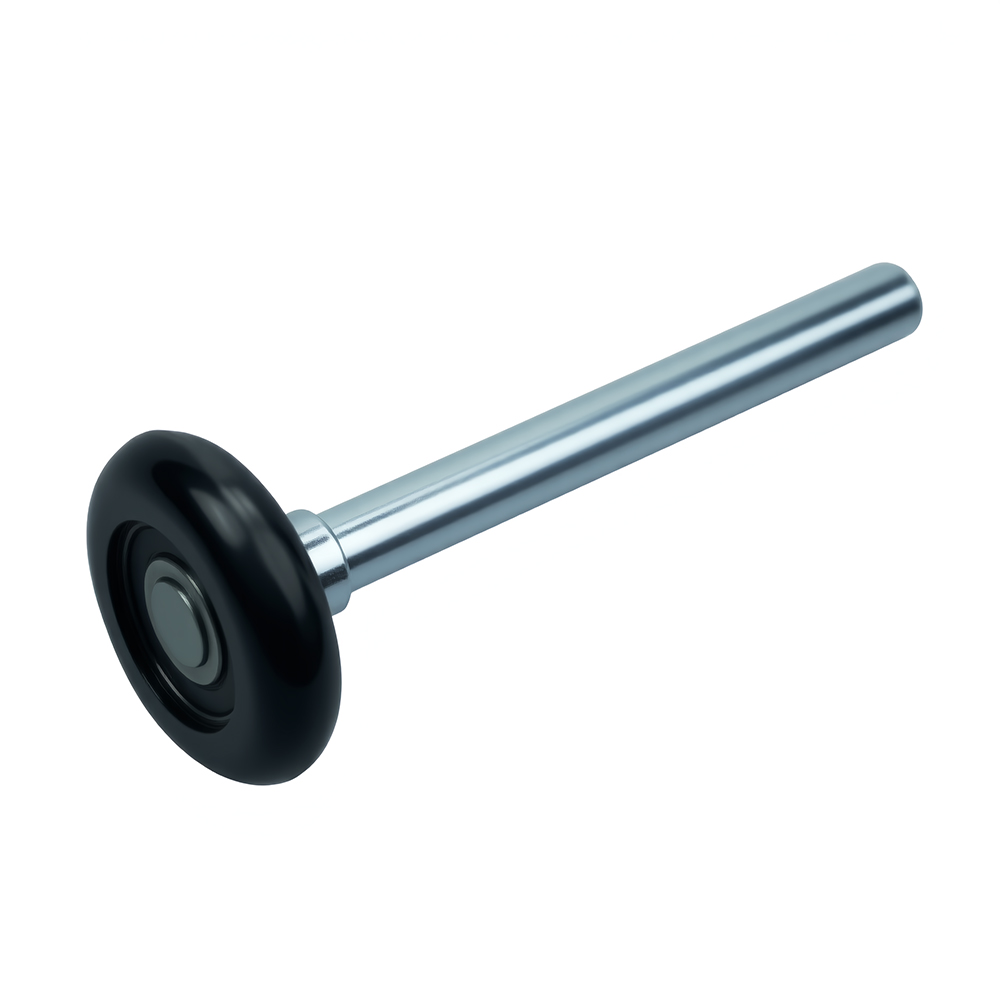
Rolling-friction reliability of Nylon Garage Door Wheels in modern sliding systems
In advanced garage door assemblies, the reliability of Nylon Garage Door Wheels is essential for maintaining smooth, quiet, and durable operation. Their engineered rolling-friction behavior directly impacts alignment stability and long-term noise and wear reduction in sliding and alignment systems.
In the context of modern garage door systems, the selection of roller materials directly influences operational stability, acoustic performance, and long-term reliability. Nylon garage door wheels have gained prominence in sliding and rolling mechanisms due to their distinctive material properties, particularly when the engineering objective is to minimize noise and wear during repeated alignment cycles. For door alignment engineers, the technical evaluation of nylon wheels requires a detailed understanding of rolling-friction behavior, material durability, and the mechanisms by which these factors affect system performance over time. The following structured technical review examines the core engineering considerations for nylon garage door wheels, with a focus on their reliability in controlling friction, reducing noise, and mitigating wear within sliding and alignment scenarios.
The primary function of garage door wheels is to facilitate smooth, guided movement of sectional panels along the track system, ensuring consistent door alignment and minimizing lateral deviation. Nylon wheels are typically manufactured from high-grade polyamide polymers, selected for their favorable balance of mechanical strength, low density, and self-lubricating surface characteristics. These properties are critical in applications where rolling friction must be tightly controlled to prevent excessive resistance, which can lead to uneven panel movement and misalignment.
Structurally, nylon garage door wheels are composed of a molded nylon tread mounted onto a steel or stainless-steel ball bearing assembly. The interface between the nylon tread and the steel track is a key area of analysis, as it determines the coefficient of rolling friction and, by extension, the force required to initiate and sustain motion. The low surface energy of nylon contributes to a reduced friction coefficient compared to traditional metal rollers, resulting in quieter operation and less vibration transmission through the door assembly.
In terms of mechanical design, the geometry of the wheel—specifically tread width, diameter, and profile—must be matched to the track dimensions and loading requirements. A wider tread distributes contact stresses more evenly, reducing localized wear and extending service life. The molded nylon material is engineered to resist deformation under typical residential and light commercial loads, maintaining dimensional stability and alignment precision throughout repeated cycles.
Material selection for the bearing assembly is equally critical. While some cost-sensitive designs employ zinc-plated steel bearings, higher-reliability systems specify stainless steel or sealed ball bearings to prevent corrosion and ingress of contaminants. The bearing’s internal clearance and lubrication regime directly affect rolling resistance and the onset of noise due to micro-slippage or dry running. Nylon’s inherent damping capacity further attenuates high-frequency vibrations, contributing to a quieter operational profile compared to all-metal roller assemblies.
Reliability in garage door wheel systems is measured by their ability to maintain low rolling resistance, resist wear, and suppress noise over extended service intervals. Nylon, as a polymeric material, exhibits excellent abrasion resistance under moderate loading and velocity conditions. The self-lubricating nature of nylon reduces the need for external lubricants, which can attract dust and debris, leading to premature wear in metal-on-metal systems. In addition, nylon’s resilience allows it to absorb minor track imperfections without transmitting excessive shock loads to the door panels or mounting hardware.
From a reliability engineering perspective, the core pain points of noise and wear are addressed through both material selection and system integration. Noise generation in garage door systems is primarily attributed to impact events, surface roughness, and resonance within the door structure. Nylon wheels, due to their lower modulus of elasticity compared to steel, deform slightly under load, dissipating impact energy and reducing audible noise. This is particularly advantageous in residential settings or where noise abatement is a design requirement.
Wear mechanisms in nylon garage door wheels are predominantly abrasive and adhesive in nature. Abrasive wear is mitigated by the smooth surface finish of nylon and its ability to form a transfer film on the steel track, which acts as a protective barrier. Adhesive wear is minimized by the chemical incompatibility between nylon and steel, preventing material transfer and galling. The long-chain molecular structure of nylon also provides resistance to fatigue cracking, a common failure mode in cyclically loaded components.
The evaluation of nylon garage door wheels must consider both laboratory and field performance data. Standardized wear testing, such as ASTM G99 (pin-on-disk) or custom rolling endurance rigs, provides quantitative measures of material loss, friction coefficient stability, and noise emission over simulated duty cycles. Field observations complement these results by accounting for real-world variables such as track contamination, temperature fluctuations, and installation variability.
A critical aspect of technical evaluation is the analysis of rolling-friction behavior under varying load and speed conditions. Nylon’s friction coefficient is typically in the range of 0.15–0.25 against steel, which is substantially lower than that of steel-on-steel contacts. This reduction in friction translates to lower actuation forces, less strain on opener mechanisms, and improved alignment retention. However, engineers must account for potential thermal softening of nylon at elevated temperatures, which can lead to increased deformation and rolling resistance if not properly managed through material specification and wheel geometry.
Environmental durability is another dimension of reliability for nylon garage door wheels. Polyamide polymers are susceptible to hydrolysis and UV degradation if not stabilized with appropriate additives. High-quality wheels incorporate UV inhibitors and moisture-resistant formulations to maintain mechanical integrity in outdoor installations. Chemical resistance to common garage contaminants—such as lubricants, cleaning agents, and de-icing salts—must also be verified to prevent embrittlement or swelling of the nylon tread.
The integration of nylon wheels into the broader garage door system requires precise alignment and secure mounting. Misalignment between the wheel axis and track can induce uneven loading, accelerating wear and generating noise. Therefore, installation protocols should specify allowable tolerances for track straightness and parallelism. Periodic inspection of wheel wear patterns and bearing condition is recommended to detect early signs of misalignment or material fatigue.
Ensuring long-term performance of Nylon Garage Door Wheels
In summary, the technical evaluation of nylon garage door wheels from a material durability and friction control perspective demonstrates their suitability for noise-sensitive and high-cycle alignment applications. The combination of low rolling friction, self-lubricating properties, and resistance to abrasive wear addresses the core pain points encountered by door alignment engineers. However, optimal performance is contingent upon correct material specification, bearing selection, and precise installation within the door system.
Engineers tasked with specifying garage door roller systems should verify that nylon wheels meet the required load ratings, dimensional tolerances, and environmental resistance criteria for the intended application. Detailed review of manufacturer data sheets, coupled with in-situ performance monitoring, provides the necessary assurance of long-term reliability. Where noise and wear reduction are critical, nylon wheels offer a technically robust solution, provided that their integration is supported by rigorous engineering controls and regular maintenance protocols.
For ongoing system reliability, it is essential to periodically assess wheel condition, track alignment, and bearing lubrication state. Any deviation from expected rolling-friction behavior or emergence of abnormal noise should prompt immediate technical investigation to prevent escalation of wear or misalignment. By adhering to these engineering best practices, door alignment engineers can ensure that nylon garage door wheels deliver consistent, low-noise, and low-wear performance throughout the operational life of the door system.
For further technical documentation and installation tutorials, refer to our installation tutorials and material composition resources.
 English
  Русский
  日本語
日本語  한국어
한국어  Français
  Deutsch
  العربية
  Português
  Español