
Cable Break Safety Device Messaging Notes
Reference Standard: Relevant material, dimensional, and receiving-inspection practices for metal garage door hardware, supported by general engineering references from ASTM International and industry safety context from DASMA.
Short Answer
A cable break safety device is often discussed only when a garage door or industrial sectional door has already shown a visible operating problem. That is too late for a precise procurement conversation. A better B2B messaging angle is to treat the Safety Stopping Bottom Bracket as a part whose reliability starts before the first screw is tightened: during packaging, stacking, transport, receiving inspection, and pre-installation flatness control.
The catalog data confirms a practical product family rather than a single universal item: BT-235 2 inch Safe Bottom Bracket unadjustable, BT-236 2 inch Safe Bottom Bracket adjustable, BT-237 3 inch Safe Bottom Bracket unadjustable, BT-239 and BT-240 3 inch Safe Bottom Bracket adjustable, and BT-238 Residential 2 inch Safe Bottom Bracket. The shared technical boundary is clear: these parts are linked to 2 inch or 3 inch tracks, 11mm roller shaft fit, and galvanized finish. The catalog does not provide load ratings, salt spray hours, steel grade, certification claims, or temperature limits, so a responsible article must not invent them.
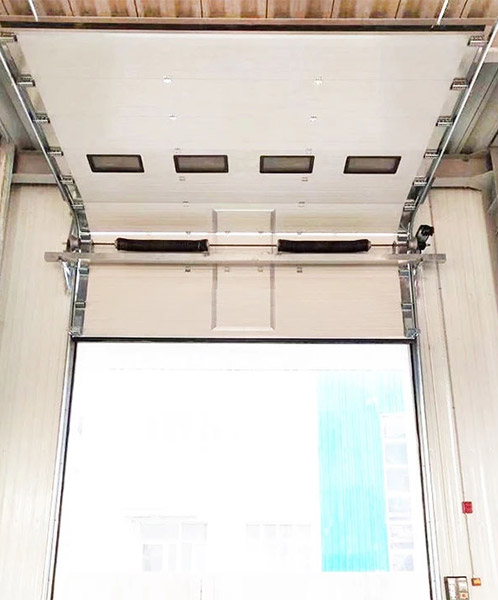
Cable Break Safety Device as a Pre-Installation Flatness Control Point
The first useful shift in messaging is simple: do not start the story from cable failure. Start from the receiving table. A Safety Stopping Bottom Bracket can look acceptable in a parts box, yet still carry small plane deviation caused by stacked packaging pressure, side impact during transport, or uneven contact between metal parts. This is not a dramatic failure claim. It is a mechanical reality for formed galvanized hardware that must later sit against a door-panel edge while also accepting a roller shaft and fastener pressure.
The confirmed specifications create a narrow but important inspection frame. A part intended for a 2 inch track should not be judged by the same installation expectation as a 3 inch track item, but the article should not become another track-size comparison. The key point is that both categories still require a stable contact plane before installation. The 11mm roller shaft is not a performance badge; it is a fit relationship. If the bracket plane is slightly twisted before assembly, the shaft relationship can appear acceptable in a loose hand check, then become less forgiving once the bracket is clamped to the lower corner of a sectional panel.
A practical edge-case model can be described without inventing unavailable factory data. Imagine a carton of galvanized bottom brackets stored under vertical pressure in a humid warehouse, with vibration during transport and repeated small impacts between nested parts. During the early stage, the visible symptom may only be light rub marks on the galvanized finish. During the middle stage, some parts may show a tiny rocking motion when placed on a flat inspection surface. In a severe receiving scenario, the installer may find that fasteners pull one side down first while the opposite edge stays slightly proud. This is not a certified test result; it is a conservative mechanical model based on how flat metal components behave under pressure, friction, and constraint.
A cross-dimensional comparison makes the message clearer. A loose bracket placed on a bench is mainly judged by visual appearance. A bracket placed against a panel edge is judged by surface contact. A bracket tightened with fasteners is judged by compression behavior. A bracket combined with an 11mm roller shaft is judged by alignment sensitivity. These are different inspection moments, and the same part can pass one moment while exposing a problem in the next.
| Receiving Moment | What Is Being Observed | Relevant Confirmed Data | Risk If Ignored |
|---|---|---|---|
| Carton opening | Visible dents, rub marks, deformation | Galvanized finish | Hidden transport pressure may be missed |
| Flat surface check | Rocking, twist, uneven contact | Safe Bottom Bracket form | Plane error may enter installation |
| Track fit review | Correct product family | 2 inch or 3 inch track | Wrong bracket category may be mixed |
| Shaft relationship check | Fit around roller-shaft geometry | 11mm roller shaft | Assembly may feel tight or biased |
| Final fastening | Compression pattern | Adjustable or unadjustable model | Uneven clamping may distort the bracket further |
This gives sales and engineering teams a more defensible way to discuss product quality. Instead of claiming broad safety benefits that the catalog does not quantify, the copy can say that pre-installation flatness checks help buyers identify handling-related deformation before the bracket becomes part of the door system.
Small Plane Deviation Becomes Visible After Fastening
Small plane deviation is difficult to see because an uninstalled bracket has very little external constraint. It can be held in the hand, rotated, and visually accepted. Once it is fastened, the bracket becomes part of a stacked mechanical system: panel edge, fastener head, bracket contact plane, shaft position, and track path. That is when a small difference in flatness can become visible as uneven contact, minor rocking, hole-edge stress, or a less natural roller-shaft relationship.
The mechanism starts with force concentration. When a formed metal bracket is tightened, the fastener head does not apply pressure across the full part evenly. It creates localized clamp force around the hole. If the bracket is already slightly out of plane, the first tightened point can pull the metal toward the panel, while another area resists contact. In an adjustable Safe Bottom Bracket, slot geometry may allow some positioning compensation, but it does not automatically remove twist from the metal plane. In an unadjustable Safe Bottom Bracket, the installed position depends even more heavily on pre-existing bracket geometry and hole alignment.
The confirmed 11mm roller shaft matters here as an assembly relationship. It should not be presented as proof of higher strength or premium performance. Its value in this article is diagnostic: a shaft fit check can reveal whether the bracket sits naturally after fastening. If the bracket plane is not stable, the shaft may still enter, but the surrounding geometry may show uneven contact or directional pressure. That is a different issue from track-size selection, and it should not be confused with whether the part is made for a 2 inch track or a 3 inch track.
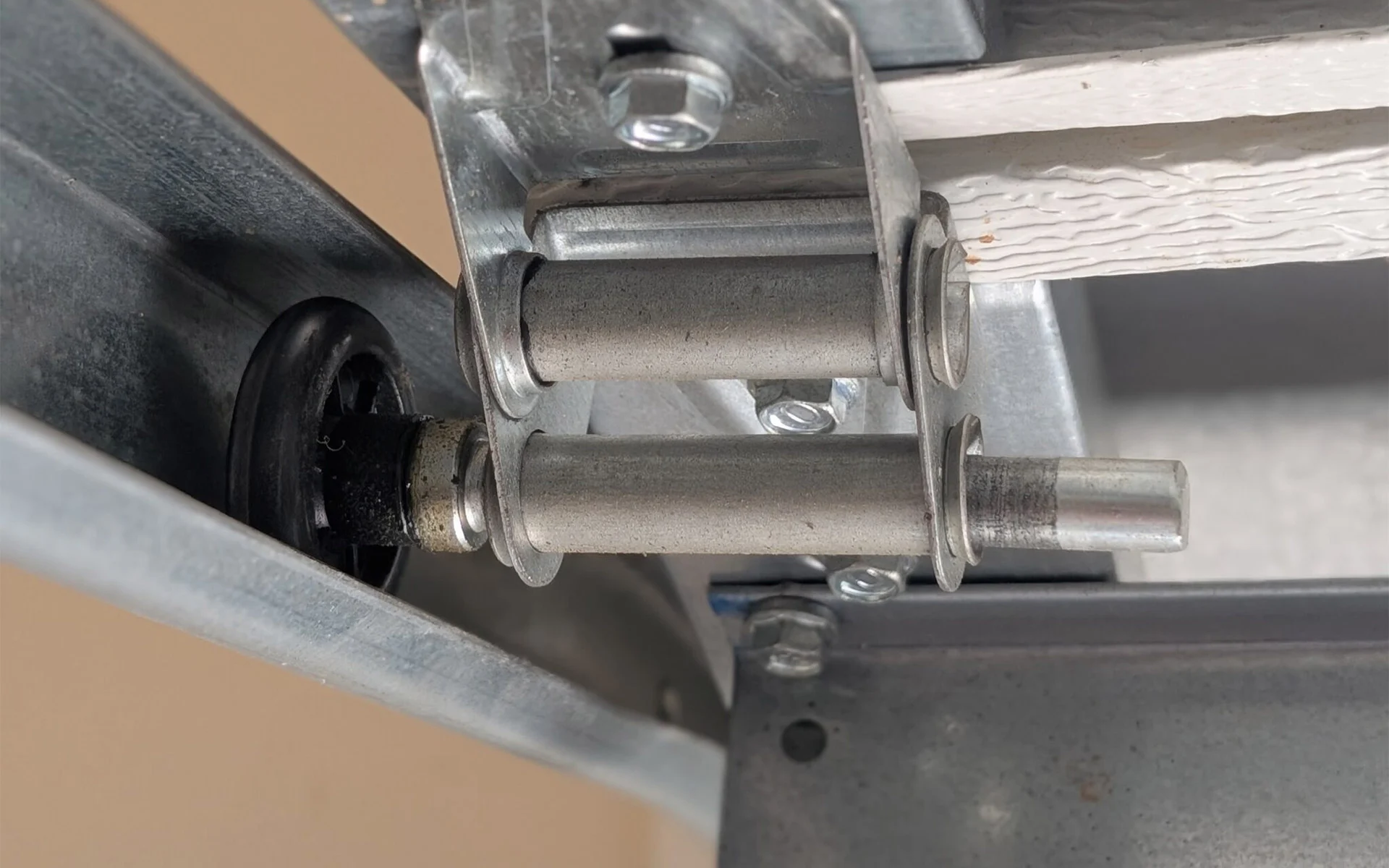
A comparison case helps separate appearance from installed behavior. In Case A, a galvanized bracket has no obvious dent, sits flat on a bench, and accepts the roller shaft smoothly before fastening. In Case B, a bracket looks visually similar, but rocks slightly when placed on a flat reference surface. After tightening, Case B may need extra installer correction, may show uneven pressure marks, or may create a less consistent roller movement path. The difference is not always visible at the product-photo level. It appears when geometry is constrained.
An extreme but realistic pressure timeline can be framed as follows. At the initial stage, the bracket shows only a small surface contact mark from stacking. At the middle stage, one flange or contact edge may sit fractionally higher than the opposite side. At the late stage, fastening pressure may convert that small deviation into a visible plane mismatch. The technical lesson is not that every transport mark is a failure. The lesson is that receiving inspection should separate harmless surface rubs from geometry-affecting deformation.
KEY TAKEAWAYS
- A bracket that looks acceptable loose can behave differently after fastener clamp force is applied.
- The 11mm roller shaft should be used as a fit relationship check, not as a performance claim.
- A small rocking motion on a flat surface is an early warning sign before installation effort increases.
Galvanized Surface Is Not the Main Story: Contact Marks Reveal Transport Stress First
The catalog confirms a galvanized finish, but this article should not turn that into a corrosion-lifetime story. The more useful angle is receiving intelligence: galvanized surfaces make handling marks, contact scratches, pressure zones, and friction paths easier to observe. In this context, the surface is not the final benefit. It is the inspection background.
A galvanized finish can help resist ordinary corrosion better than bare steel in many common environments, but the catalog does not provide zinc thickness, salt spray duration, chemical coating method, or third-party test values. For that reason, copywriting should avoid precise corrosion promises. The safe message is that visible surface condition can help buyers identify whether parts were rubbed, compressed, or impacted before use.
Transport stress usually appears before functional stress. A bracket may never have touched a garage door, yet it can already show pressure marks from being packed tightly with similar metal parts. Light marks may be cosmetic. Deeper gouges near holes, edges, bends, or shaft-related areas deserve closer attention because those regions participate in later assembly. A mark in the middle of a non-contact face is not equal to a bend near a fastening zone. This distinction makes the content more helpful than generic “check the surface” advice.
A cross-dimensional test case can compare three receiving observations. First, a bracket with uniform light surface rubs but no rocking on a flat surface may remain acceptable under general receiving practice. Second, a bracket with one raised corner and concentrated rub marks near a bend should be isolated for closer dimensional review. Third, a bracket with hole distortion, sharp burrs, or visible bend deformation should not be installed without confirmation. These are practical receiving categories, not factory-certified thresholds.
The material behavior can be explained at a basic engineering level. Galvanized metal surfaces can show contact memory because friction changes surface appearance. Under stacked pressure, two metal parts may polish, scratch, or mark each other at high points first. Those high points may reveal where compression occurred. If the part also rocks on a flat surface, the surface mark becomes more meaningful because it may correlate with pressure-induced plane change. If the part remains flat and holes remain clean, the same mark may be only a cosmetic handling trace.
This messaging angle is valuable for B2B buyers because it respects what the catalog proves and what it does not prove. The article can confidently discuss galvanized finish as a confirmed product attribute, while avoiding unsupported claims about exact coating performance. It also turns the surface into a practical receiving tool: not a marketing adjective, but a visible layer that helps the buyer decide whether more inspection is needed.
Buyer-Side Receiving Check for Safety Stopping Bottom Bracket Plane Accuracy
A buyer-side receiving check should be narrow, repeatable, and tied to known product data. It should not become a vague quality-control encyclopedia. For this product family, the confirmed inspection anchors are 2 inch track compatibility, 3 inch track compatibility, 11mm roller shaft relationship, adjustable or unadjustable Safe Bottom Bracket versions, and galvanized finish. Everything beyond those points should be described as general receiving practice, not as a catalog guarantee.
The first solution is flatness screening before storage release. The execution protocol is straightforward: remove samples from different carton layers, place each bracket on a clean flat reference surface, and check for rocking, raised corners, visible twist, or asymmetrical contact. The material expectation is not a chemical transformation; it is a physical selection outcome. Parts that remain stable on the surface are less likely to introduce installation correction at the panel edge. The hidden cost is inspection time, but this can be controlled by sampling cartons from top, middle, and bottom layers rather than checking every piece in low-risk shipments.
The second solution is shaft-fit review using the 11mm roller shaft relationship. The execution protocol should avoid forcing the part. Insert or align the relevant shaft component gently and observe whether the fit feels natural before the bracket is constrained by panel fastening. The expected material response is geometric confirmation: holes and formed areas should behave consistently without requiring excessive hand correction. The side effect is that an aggressive test can scratch the galvanized finish, so the check should be controlled and clean.
The third solution is model separation between adjustable and unadjustable versions. Adjustable Safe Bottom Brackets may offer field positioning flexibility, while unadjustable versions depend more strictly on fixed geometry. The execution protocol is to keep labels, cartons, and inspection samples separated by product code or bracket type. The expected operational benefit is lower assembly confusion. The hidden cost is warehouse handling discipline. A mixed bin may look efficient, but it increases the chance that a receiving issue will be misdiagnosed as an installation issue.
The fourth solution is surface-mark grading without overclaiming corrosion performance. The execution protocol is to classify surface marks by location: broad cosmetic rubs, edge scratches, hole-area damage, bend-zone marks, and deformation-linked marks. The expected material outcome is better risk separation. A harmless cosmetic mark should not trigger unnecessary rejection, while a mark connected to bend distortion or hole damage should receive attention. The side effect is subjective judgment, so teams should keep photo records for repeated purchase batches.
PRO-TIP / CHECKLIST
- Confirm whether the received bracket group is intended for 2 inch track or 3 inch track use.
- Check that the product type is separated as adjustable or unadjustable before issuing parts to installers.
- Place sampled brackets on a flat reference surface and look for rocking or raised edges.
- Use the 11mm roller shaft relationship as a gentle fit check, not as a forced installation test.
- Review galvanized surface marks by location, especially near holes, bends, and shaft-related areas.
- Separate parts with visible twist, hole deformation, or severe edge damage for further review.
- Keep sample photos from each shipment to compare packaging pressure patterns over time.
- Avoid turning general receiving checks into unsupported claims about certified load capacity or corrosion hours.
A concise receiving matrix can help buyers standardize decisions:
| Checkpoint | Confirmed Data Used | General Acceptance Logic | Escalation Trigger |
|---|---|---|---|
| Track category | 2 inch or 3 inch track | Correct product family is identified before installation | Mixed model cartons or unclear labels |
| Shaft relationship | 11mm roller shaft | Fit is reviewed gently without forcing | Binding, skew, or inconsistent fit |
| Bracket plane | Safe Bottom Bracket form | Part rests without obvious rocking | Raised corner, twist, or unstable contact |
| Surface condition | Galvanized finish | Light cosmetic rubs are separated from deformation signs | Deep marks near holes, bends, or edges |
| Version control | Adjustable or unadjustable | Correct type is issued for the intended assembly | Adjustable and fixed parts mixed together |
| Receiving record | Shipment sample photos | Repeated patterns are traceable | Same pressure mark appears across batches |
This structure also creates better sales copy. Instead of saying the part is simply durable or safe, the content can say that careful receiving checks help protect installation consistency. That is more credible, more useful, and less likely to duplicate older pages about emergency load transfer, first-cycle verification, or track-size comparison.
Frequently Asked Questions (FAQ)
How to install garage door springs and cables?
Garage door springs and cables are high-tension components and should be handled by trained technicians. For the bottom bracket area, the practical concern is to confirm bracket type, track compatibility, shaft relationship, and visible deformation before installation. Do not loosen cable-connected bottom hardware without proper safety procedure.
How much does a new garage door cost?
The cost depends on door size, panel material, insulation, hardware, opener configuration, labor, and local service rates. Bottom brackets and cable-related safety hardware are only one part of the total system. For industrial or sectional doors, hardware compatibility checks can reduce unexpected replacement labor.
How wide is a garage door?
Residential single garage doors are commonly narrower than double doors, while industrial sectional doors vary widely by opening design. Width alone does not determine bottom bracket selection. The relevant hardware checks in this article focus on the bracket family, track category, roller shaft relationship, and receiving condition.
How to remove battery from Chamberlain garage door opener?
Battery removal depends on the opener model, so the manufacturer’s manual should be followed. This article focuses on sectional door bottom hardware, not opener electronics. Do not confuse opener battery service with cable, spring, or bottom bracket work, which may involve stored mechanical tension.
How to reset garage door code?
Garage door code reset procedures vary by opener brand and wall control system. Follow the opener manufacturer’s instructions. A code reset does not correct mechanical issues such as bracket deformation, shaft misalignment, track fit problems, or cable-related bottom hardware concerns.
How to fit garage door springs?
Garage door springs should be fitted only with proper tools, training, and safety controls because stored spring energy can be dangerous. If bottom brackets or cable-related safety devices are being replaced at the same time, verify part identity and bracket condition before connecting the system under load.
 English
  Русский
  日本語
日本語  한국어
한국어  Français
  Deutsch
  العربية
  Português
  Español